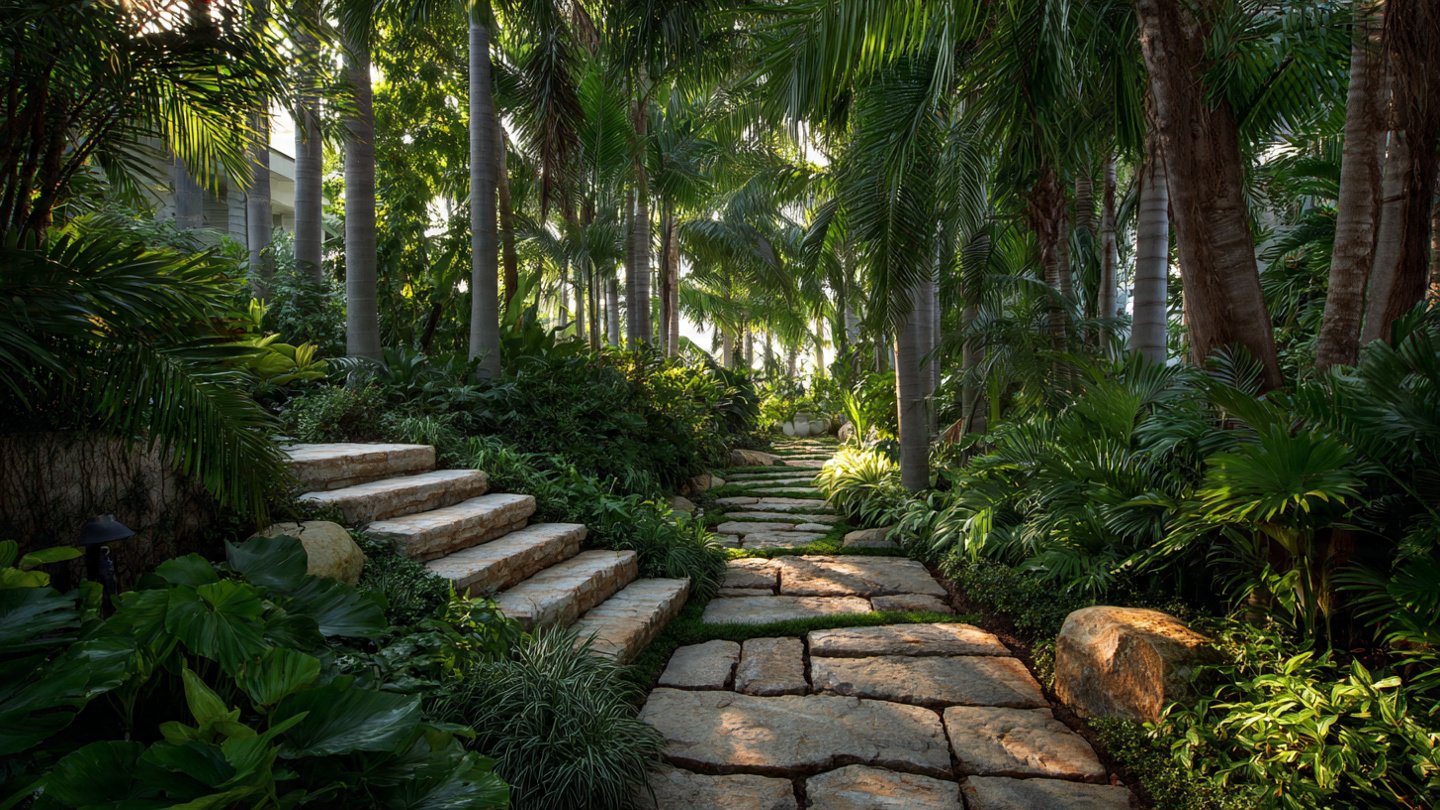
Creating a stunning landscape design centered around palm trees can transform your outdoor space into a tropical oasis. With their unique silhouettes, lush fronds, and ability to thrive in various climates, palms offer versatility and beauty that appeals to many homeowners and landscape designers alike. This guide will take you through the steps to easily create awe-inspiring palm-based landscape designs, from choosing the right palms to incorporating complementary plants and elements.
Understanding Palm Varieties
Types of Palms
Before diving into design, it’s essential to understand the different types of palms available:
-
Coconut Palm (Cocos nucifera): Known for their tall, slender trunks and large fronds, these palms are iconic in tropical coastal regions.
-
Date Palm (Phoenix dactylifera): With a stocky trunk and feathery leaves, date palms add a stately elegance to any garden.
-
Areca Palm (Dypsis lutescens): Popular for indoor and outdoor spaces, areca palms have bushy fronds that create a lush, tropical feel.
-
Queen Palm (Syagrus romanzoffiana): Notable for their graceful arching fronds and smooth trunks, queen palms are highly ornamental and provide great shade.
-
Sago Palm (Cycas revoluta): This cycad resembles a palm but is not a true palm. Its rosette of leathery leaves makes it an interesting focal point.
Climate and Growing Conditions
Understanding the growing conditions of palms is crucial for a thriving landscape:
- Hardiness Zones: Different palms thrive in varying hardiness zones (USDA zones 8-11 are most common).
- Sunlight Requirements: Most palms prefer full sun but some, like the areca palm, can tolerate partial shade.
- Soil Type: Sandy or well-draining soil is typically best for palms.
- Watering Needs: While palms are drought-tolerant, regular watering during their establishment phase is important.
Planning Your Landscape Design
Assessing Space and Setting Goals
-
Evaluate Your Space: Consider the size of your yard, the existing landscape elements, and any hardscaping features (patios, walkways).
-
Define Objectives: Think about what you want to achieve. Are you looking for a tropical retreat, a modern minimalist design, or a bold focal point?
Design Principles
- Balance: Distribute palm trees evenly throughout your space to create a harmonious look.
- Focal Points: Use palms with dramatic heights or unique forms as focal points in your landscape.
- Scale and Proportion: Choose palms that fit well within the scale of your space; don’t overpower small yards with towering trees.
Sketching Your Design
Creating a rough sketch helps visualize how your palms and other plants will fit together:
- Draw a Layout: Use graph paper or digital design software to plot your design.
- Include Paths: Plan pathways that guide visitors through your landscape.
- Incorporate other Elements: Consider seating areas, water features, or garden sculptures.
Choosing Complementary Plants
Layering with Plants
Integrating other plants with your palms not only enhances the aesthetic appeal but also mimics natural ecosystems:
-
Ground Covers: Select low-growing plants like ferns or creeping thyme to fill in spaces beneath palms.
-
Shrubs: Use medium-height shrubs like hibiscus or crotons to create layers and provide vibrant color contrast.
-
Flowering Plants: Incorporate perennial flowers such as daylilies or agapanthus that bloom at various times throughout the year.
Creating Diversity
Mixing different leaf shapes, colors, and textures offers visual interest:
- Varieties of Leaves: Combine the feathery fronds of palms with the broad leaves of tropical plants for contrast.
- Color Palettes: Use colors that complement the green of the palms, such as blues, oranges, or purples, for flowering plants.
Hardscaping Elements
Pathways and Patios
Adding hardscaping features can enhance the overall design:
-
Stone Pathways: Create walkways with natural stones to guide visitors while framing your palms.
-
Paved Patios: Consider a shaded seating area with outdoor furniture surrounded by palm trees.
Water Features
Integrating water into your design can create a calming atmosphere:
- Ponds or Fountains: Place a small pond or bubbling fountain near your palms to encourage wildlife and add tranquility.
Garden Borders
Using borders helps define areas in your landscape:
- Stone or Brick Edging: Use low walls, bricks, or stones to create separation between flower beds and palm areas.
Implementing Your Design
Planting Techniques
-
Prepare Your Site: Clear the area of weeds and debris, turning the soil to improve drainage.
-
Planting Depth: Ensure palms are planted at the right depth; the top of the root ball should be level with the soil surface.
-
Watering: Provide a deep watering immediately after planting to help them establish roots.
Maintenance Tips
Regular maintenance is essential for a thriving landscape:
- Pruning: Remove any dead fronds or flower stalks to encourage new growth.
- Fertilizing: Use slow-release fertilizers during the growing season to promote vibrant foliage.
- Mulching: Apply organic mulch to retain moisture and suppress weeds.
Seasonal Considerations
Winter Care
Depending on your climate, winter care may be necessary:
- Wrap Smaller Palms: For palms in colder climates, consider wrapping them to protect against frost.
- Use Heat Lamps: In severe winter areas, heat lamps can provide warmth to delicate palms.
Summer Maintenance
In the summer, ensure adequate hydration:
- Deep Watering: Water early in the morning or late in the evening to reduce evaporation.
- Observe Pests: Keep an eye out for pests like scale or mealybugs, and treat promptly.
Final Touches
Decorative Accents
Incorporate unique decorative elements to enhance your palms and theme:
- Lighting: Use landscape lighting to highlight palm silhouettes at night, creating a magical ambiance.
- Garden Art: Add sculptures or pots that complement the tropical theme.
- Furniture: Use woven furniture or swings that align with the tropical aesthetic.
Share Your Tropical Oasis
Once you’ve completed your palm-based landscape design, consider sharing your creation:
- Take Photos: Capture the transformation to showcase your efforts online or in your community.
- Host a Gathering: Invite friends and family to enjoy your new space, providing ideas for their future landscaping projects.
Conclusion
Creating a stunning palm-based landscape design doesn’t have to be overwhelming. By understanding palm varieties, planning your design, and incorporating complementary plants and features, you can develop a beautiful outdoor oasis that reflects your personal style. Whether you aim for a tropical resort vibe or a serene garden retreat, palms will undoubtedly bring a touch of paradise into your life. With regular maintenance and thoughtful design choices, your landscaping efforts will reward you with a breathtaking environment that provides joy for years to come.