
Introduction: The Wonder of Baobab Trees
Baobab trees, also known as Adansonia digitata, are iconic for their massive trunks and longevity. Growing a baobab from seed is an exciting journey for gardeners and plant enthusiasts. These trees are native to Africa and thrive in warm climates. Starting from seed allows control over growth and organic cultivation. Baobabs are drought-resistant and support local ecosystems. Their flowers and fruits have nutritional and medicinal value. Patience is essential as they grow slowly initially. This guide provides a step-by-step approach for successful germination. Cultivating baobabs brings both ecological and aesthetic rewards.
Selecting Quality Baobab Seeds
Choose seeds from mature and healthy baobab fruits. Avoid cracked, shriveled, or discolored seeds. High-quality seeds increase germination success. Wash seeds to remove pulp residues. Soak seeds in warm water for 24 hours. Seed selection ensures stronger seedlings. Organic sources are preferred to avoid chemical contamination. Healthy seeds form the foundation for thriving trees. Proper selection impacts long-term growth and resilience.
Scarification: Preparing Seeds for Germination
Baobab seeds have hard shells that require scarification. Lightly sand the seed surface to create small abrasions. Alternatively, soak seeds in boiling water for a few minutes. Scarification helps water penetration, triggering germination. Avoid excessive sanding that damages the embryo. Scarified seeds germinate faster and more uniformly. Proper preparation increases seedling success. Patience is required during this early stage. Scarification is the first critical step.
Stratification Not Required
Unlike temperate trees, baobab seeds do not require cold stratification. They are adapted to warm climates and germinate best in moderate warmth. Maintain temperatures above seventy-five degrees Fahrenheit. Avoid exposing seeds to cold, which slows sprouting. Controlled warmth accelerates development. Understanding natural requirements improves success. Stratification is unnecessary but careful environmental control is essential. Warmth is key for germination.
Choosing Containers for Seedlings
Start seeds in small pots with drainage holes. Use well-draining soil mixes such as sandy loam with compost. Avoid compacted soil that can stunt roots. Containers should provide space for root development. Label pots with seed variety for tracking. Small pots allow easier observation and care. Organic soil supports early growth. Proper container selection ensures healthy seedlings. Pot size and soil matter from day one.
Planting the Seeds
Plant seeds approximately half an inch deep in the soil. Cover lightly and water gently. Maintain consistent moisture without waterlogging. Place containers in bright, indirect sunlight. Monitor seeds daily for signs of sprouting. Germination usually occurs within one to three weeks. Seed depth and moisture management are critical. Planting correctly ensures strong early growth. Observation during this phase is essential.
Watering Techniques for Baobab Seedlings
Seedlings need regular, gentle watering. Soil should remain damp but not soggy. Overwatering can cause root rot and fungal problems. Drip irrigation or watering cans work well for precise control. Water early in the day to reduce fungal risks. Monitor soil daily, especially during warm conditions. Gradually reduce watering as seedlings strengthen. Proper hydration supports healthy leaf and stem development. Watering is crucial for early survival.
Light Requirements
Baobab seedlings require bright, indirect sunlight for optimal growth. Avoid harsh direct sun, which may scorch young leaves. Gradually acclimate seedlings to full sun over time. Use grow lights if natural sunlight is insufficient. Light supports photosynthesis and robust stem development. Rotate containers for even growth. Consistent lighting produces compact and healthy seedlings. Proper light management sets the stage for mature trees. Balanced exposure is key.
Fertilization of Seedlings
Apply diluted organic fertilizer once seedlings have two true leaves. Nitrogen supports leaf growth, phosphorus supports roots, and potassium enhances overall resilience. Avoid over-fertilization, which can damage delicate roots. Use organic liquid fertilizers for even absorption. Fertilization encourages strong, healthy seedlings. Monitor for signs of deficiency. Proper feeding accelerates growth and prepares seedlings for transplant. Balanced nutrition ensures survival.
Transplanting Seedlings to Larger Pots
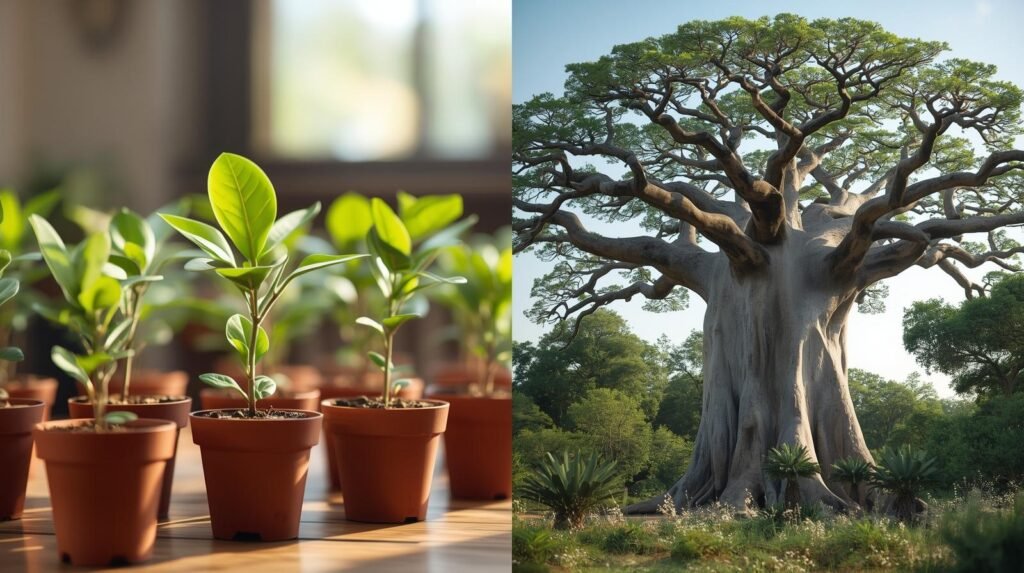
Transplant seedlings when they reach two to three inches in height. Choose larger pots with well-draining soil. Water seedlings before transplanting to reduce shock. Gently loosen roots and avoid breaking the taproot. Fill gaps with soil gradually and stabilize the plant. Proper transplantation supports continued growth. Seedlings adapt better when handled carefully. Gradual pot progression promotes strong root systems. Healthy transplants are crucial for future development.
Root Development and Observation
Monitor root growth regularly. Healthy roots should be white and fibrous. Avoid overwatering, which can suffocate roots. Observe for root-bound conditions, which may require repotting. Early detection prevents stunted growth. Strong roots are essential for drought resistance. Root health impacts long-term tree survival. Gentle handling ensures minimal stress. Observation ensures seedlings thrive.
Pruning Young Seedlings
Prune damaged or weak leaves to encourage robust growth. Avoid cutting too many leaves, which can stress the plant. Early pruning shapes the plant for healthy vertical growth. Maintain a balanced stem-to-leaf ratio. Proper pruning enhances airflow and reduces fungal risk. Prune regularly to remove yellowing or diseased leaves. This step supports overall plant vigor. Strategic pruning improves aesthetics and strength. Healthy seedlings respond better to environmental changes.
Pest Management
Baobab seedlings are vulnerable to aphids, mites, and fungal infections. Monitor plants daily. Use organic sprays or natural predators to control infestations. Avoid chemical pesticides during early growth. Maintain clean soil and containers. Early pest management prevents irreversible damage. Healthy seedlings resist disease more effectively. Integrated pest management supports organic cultivation. Vigilance ensures long-term success.
Environmental Factors Affecting Growth
Temperature, humidity, and light intensity influence seedling development. Keep seedlings above seventy-five degrees Fahrenheit. Avoid drafts and cold exposure. Moderate humidity prevents leaf dehydration. Sudden environmental changes can cause stress or leaf drop. Stable conditions encourage steady growth. Monitor environmental variables closely. Adjust care as needed. Environmental control supports thriving seedlings.
Encouraging Flowering and Fruiting (Long-Term)
Baobab trees take several years to flower. Proper sunlight, soil fertility, and pruning enhance flower development. Pollinators are essential for fruit set. Avoid chemical pesticides near flowering trees. Balanced nutrition supports blossom and fruit production. Observation ensures early detection of problems. Patience is key for flowering success. Long-term care ensures eventual fruiting. Flowers mark the tree’s maturity and reward.
Harvesting Baobab Fruit
Baobab fruits develop slowly on mature trees. Fruits are nutrient-rich and can be harvested once fully ripened. Avoid immature fruit, which may have low nutritional value. Harvest carefully to avoid damaging branches. Proper storage preserves pulp and seeds. Observing fruit maturation ensures maximum quality. Patience ensures safe and effective harvesting. Harvest rewards years of care and observation.
Common Mistakes to Avoid
Overwatering or underwatering seedlings can be fatal. Poor soil selection slows growth. Ignoring pest management risks plant health. Excessive pruning stresses young plants. Inadequate light produces weak seedlings. Transplanting too early can stunt roots. Recognizing mistakes early prevents major loss. Proper attention ensures strong, healthy baobabs. Knowledge reduces trial-and-error failures.
Long-Term Benefits of Growing Baobab Trees
Baobab trees provide nutritional fruits and medicinal properties. They improve biodiversity and support pollinators. Long-lived trees become iconic backyard features. Gardening skills and patience improve over years. Organic cultivation ensures chemical-free products. Trees contribute to ecological balance. Homegrown baobabs enhance property value and aesthetics. Long-term care brings continuous rewards. Sustainable cultivation promotes environmental stewardship.
Table: Baobab Seedling Care Checklist
Step
Select healthy baobab seeds
Step
Scarify seeds to improve germination
Step
Plant in well-draining soil and water gently
Step
Provide bright, indirect sunlight
Step
Fertilize after true leaves appear
Step
Transplant when seedlings grow stronger
Step
Monitor roots, pests, and environmental conditions
Step
Prune damaged leaves to maintain vigor