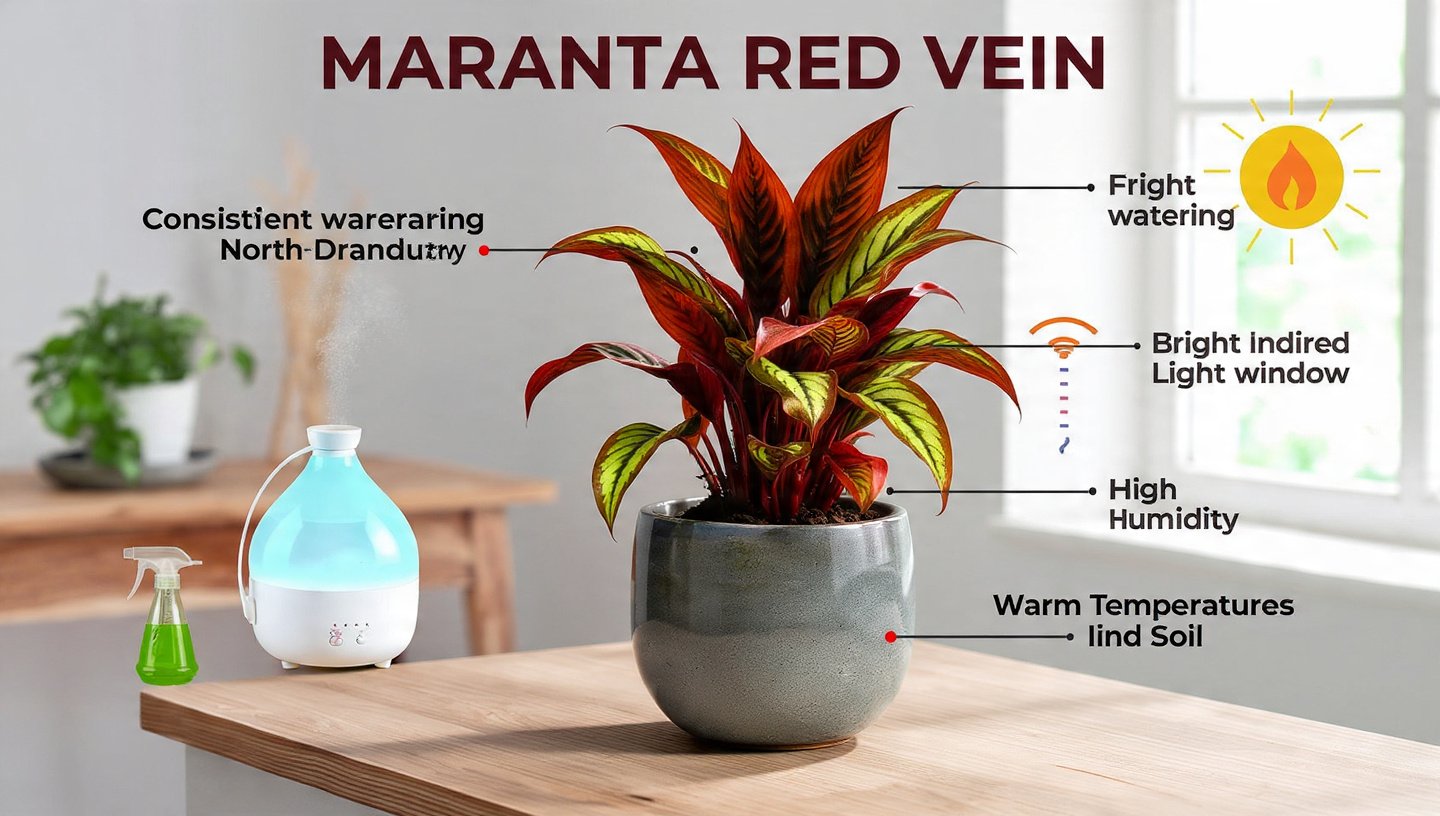
Growing plants indoors can be rewarding, and one of the most captivating options is the Maranta Red Vein, also known as the red prayer plant. This stunning species features striking red veins on its leaves, making it a favorite among indoor gardeners. In this guide, we’ll explore the best practices for cultivating Maranta Red Vein indoors, covering soil, lighting, watering, humidity, fertilization, pests, and maintenance.
Understanding the Maranta Red Vein
The Maranta Red Vein is a perennial plant native to the tropical regions of Central and South America. It belongs to the family Marantaceae, which is characterized by its unique leaf movements. The leaves of the Maranta Red Vein fold upwards at night and open again during the day, a phenomenon that gives it the name “prayer plant.” This plant not only serves as a beautiful decorative piece but also helps purify indoor air.
Choosing the Right Pot and Soil
Pot Selection
Choosing the right pot is essential for the health of your Maranta Red Vein. A pot with drainage holes is crucial to prevent waterlogging, which can lead to root rot. Consider using a pot made from breathable materials like terracotta, which allows for better airflow.
Soil Requirements
Maranta Red Vein thrives in well-draining soil that retains adequate moisture. A high-quality potting mix that includes peat moss, perlite, and vermiculite is ideal. This blend provides the necessary aeration and drainage.
Preparing the Soil
To prepare the soil, you can mix equal parts of peat moss, perlite, and potting soil. This combination will ensure that your Maranta has a nutrient-rich environment while still allowing excess water to escape.
Light Conditions
Finding the Ideal Spot
Maranta Red Vein prefers bright, indirect light. Direct sunlight can scorch the leaves, while too little light can lead to leggy growth and diminished color vibrancy. An east or north-facing window is usually perfect. If you don’t have sufficient natural light, consider using artificial grow lights.
Managing Light Exposure
Rotate the pot every few weeks to ensure even light exposure for all sides of the plant. This practice promotes symmetrical growth and prevents the plant from leaning towards the light source.
Watering Techniques
Understanding Watering Needs
Maranta Red Vein requires consistent moisture, but it’s important to avoid overwatering. The plant prefers to be slightly moist but not soggy. Typically, watering once a week is adequate, but this may vary depending on environmental conditions.
Testing Soil Moisture
Before watering, always test the soil moisture by sticking your finger about an inch deep into the soil. If it feels dry, it’s time to water. If it feels moist, wait a few more days before checking again.
Watering Method
When watering, do so until you see water draining from the bottom of the pot. This ensures that the entire root system receives moisture. Water should be at room temperature to avoid shocking the plant.
Humidity Considerations
Importance of Humidity
Being a tropical plant, Maranta Red Vein thrives in high humidity. Ideally, humidity levels should be between 50% to 60%. Low humidity can lead to brown leaf tips and stunted growth.
Increasing Humidity Indoors
- Misting: Regularly mist the leaves with water, especially during dry months. Use distilled or rainwater to avoid mineral buildup.
- Pebble Tray: Place a tray filled with pebbles and water beneath the plant. As the water evaporates, it will increase humidity around the plant.
- Humidifier: Consider using a humidifier in the room where your Maranta is located. This is especially useful in winter when indoor air tends to be drier.
- Grouping Plants: Keeping your Maranta close to other plants can help raise humidity levels through collective transpiration.
Fertilization
Choosing the Right Fertilizer
During the growing season (spring and summer), Maranta benefits from regular fertilization. A balanced, water-soluble fertilizer diluted to half strength is ideal. You can also opt for a fertilizer high in magnesium to enhance color vibrancy.
Fertilization Schedule
Fertilize your Maranta every 4 to 6 weeks during the growing season. In fall and winter, reduce or stop fertilizing, as the plant enters a dormant phase.
Signs of Nutrient Deficiency
If you notice yellowing leaves or stunted growth, it might indicate nutrient deficiency. Adjust your fertilization schedule accordingly.
Monitoring for Pests
Common Pests
Maranta Red Vein is relatively pest-resistant but can occasionally attract common houseplant pests like spider mites, aphids, and mealybugs.
Prevention
To minimize pest issues, maintain good air circulation around the plant and avoid over-fertilization, which can make the plant more susceptible. Regularly inspect the leaves for any signs of infestation.
Treatment
If you notice pests, isolate the plant immediately to prevent spreading. Use insecticidal soap or neem oil as a natural treatment, following the instructions carefully. Make sure to wipe the leaves to remove any pests or eggs.
Pruning and Maintenance
When to Prune
Regular pruning helps maintain the shape and health of your Maranta Red Vein. Remove any yellow or damaged leaves to encourage healthy growth.
Pruning Technique
Use clean, sharp scissors or pruning shears to trim the leaves. Aim to cut at the base of the leaf stem. Always ensure that your tools are sanitized to avoid introducing diseases to the plant.
Repotting Your Maranta
Signs It’s Time to Repot
Maranta Red Vein typically needs repotting every 1 to 2 years, especially if you notice roots growing out of the drainage holes or if the plant has stopped growing.
Repotting Process
- Choose a New Pot: Select a new pot that is only slightly larger than the current one.
- Prepare the New Soil: Use the previously mentioned soil mix for optimal drainage and nutrients.
- Remove the Plant: Gently remove the plant from its current pot, being careful not to damage the roots.
- Repot: Place the plant in the new pot, adding soil around the roots until it’s firmly in place.
- Water: After repotting, water thoroughly to help settle the new soil.
Propagation
Methods of Propagation
Maranta Red Vein can be propagated through division or stem cuttings. Propagating through division is particularly effective as it helps maintain the genetic integrity of the plant.
Propagation Procedure
- Division: When repotting, you can divide the root ball into two or more sections, ensuring that each section has healthy roots and foliage.
- Cuttings: Take stem cuttings with at least one leaf node. Allow the cut end to dry for a few hours before placing it in a glass of water or moist soil.
- Care for Cuttings: Place the cuttings in bright, indirect light and keep the soil moist but not soggy. It should root within a few weeks.
Troubleshooting Common Issues
Yellowing Leaves
Yellow leaves may indicate overwatering, nutrient deficiency, or insufficient light. Adjust your care routine based on these factors.
Browning Leaf Tips
This is often a sign of low humidity. Increase humidity levels through misting or using a pebble tray.
Slow Growth
If your Maranta Red Vein isn’t growing, check the lighting, watering, or nutrient levels. It may also need repotting.
Conclusion
Cultivating the Maranta Red Vein indoors can be a rewarding experience, offering lush greenery and beautiful foliage. By understanding and catering to its light, water, humidity, and nutrient needs, you can create an ideal environment for this stunning plant. Whether you are an experienced indoor gardener or a beginner, with the right care, your Maranta Red Vein will thrive and add a beautiful touch to your home. Happy gardening!