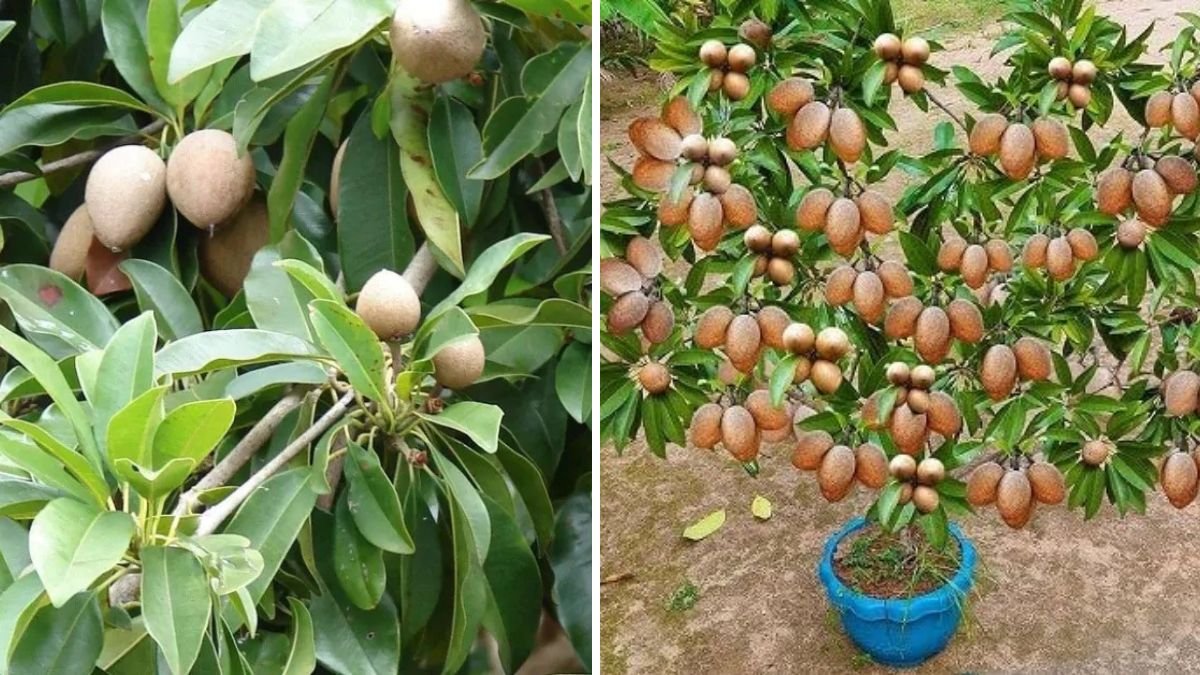
Sapodilla, also known as Chikoo, Naseberry, or Manilkara zapota, is one of the sweetest tropical fruits loved worldwide for its caramel-like taste and long fruiting season. While planting sapodilla from seeds is common, it takes 6–8 years to bear fruit and may not produce the same quality as the parent tree. But there’s good news—there are faster, more reliable propagation methods that guarantee strong plants and earlier harvests.
In this complete guide, you will learn the best ways to propagate sapodilla, the tools you need, step-by-step instructions, and expert tips to ensure your chikoo trees grow healthy, strong, and productive. Whether you’re a home gardener or small-scale farmer, these methods will help you grow sapodilla with confidence and success.
🍈🌿 Why Proper Propagation Matters for Sapodilla
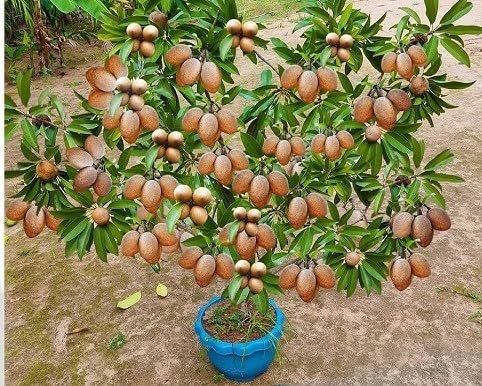
Sapodilla trees live for decades and can become extremely productive, but only if they start with good propagation. When using the right method:
✔ Trees grow faster
✔ Yield becomes higher
✔ Fruit quality is maintained
✔ Plants become disease-resistant
✔ You save years of waiting
Seed-grown sapodillas may give unpredictable fruit, but propagated ones—especially those grafted or air-layered—produce true-to-type, consistent, sweet fruits.
🌱 Best Methods to Propagate Sapodilla Trees
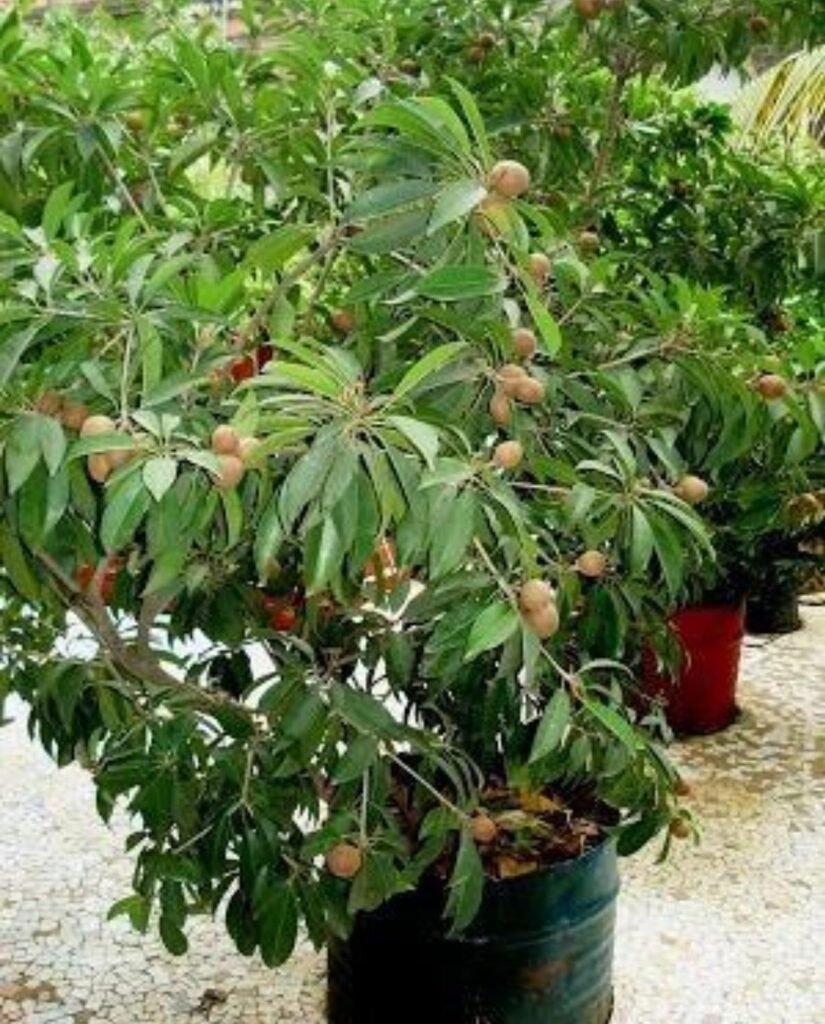
There are three highly successful methods:
1. Air Layering (Marcotting) – Best for beginners
2. Grafting (Approach or Veneer) – Best for orchard growers
3. Rooted Cuttings – Simple but requires care
Let’s explore each method step-by-step.
🍃⭐ 1. Air Layering: The Easiest and Most Reliable Method
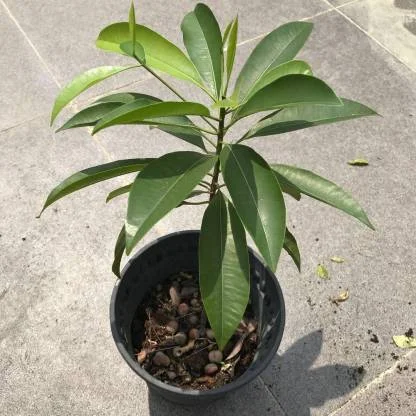
Air layering is the most popular way to propagate sapodilla because:
- It produces roots while still attached to the mother plant
- The new plant has the same characteristics as the parent
- It fruits much earlier—usually within 2–3 years
- Success rate is high even for beginners
🧰 You will need:
- Sharp knife
- Coconut husk fiber or sphagnum moss
- Plastic wrap
- Rope or tape
- Rooting hormone (optional)
🔧 Steps to air-layer a sapodilla branch:
⭐ Step 1: Choose the right branch
Select a semi-hardwood branch that is:
- Pencil-thick or slightly thicker
- 1–2 years old
- Healthy and disease-free
⭐ Step 2: Make a ring cut
Cut a 1–1.5 inch ring around the branch, removing the bark completely. Scrape off the green layer too to prevent healing.
⭐ Step 3: Apply rooting hormone (optional)
Dip the exposed ring in rooting hormone. This speeds up the rooting process.
⭐ Step 4: Wrap with moist moss
Place wet coconut fiber or sphagnum moss around the exposed area.
⭐ Step 5: Cover with plastic
Wrap tightly with a plastic sheet to hold moisture. Seal both ends with rope or tape.
⭐ Step 6: Wait for roots
Roots appear within 4–8 weeks. Once the moss ball is full of roots, cut the branch below the layered area.
⭐ Step 7: Pot the new plant
Plant it in a small pot and keep it shaded for 2–3 weeks.
Your new sapodilla tree is ready!
🌳⭐ 2. Grafting: Fast Results & High-Quality Fruit
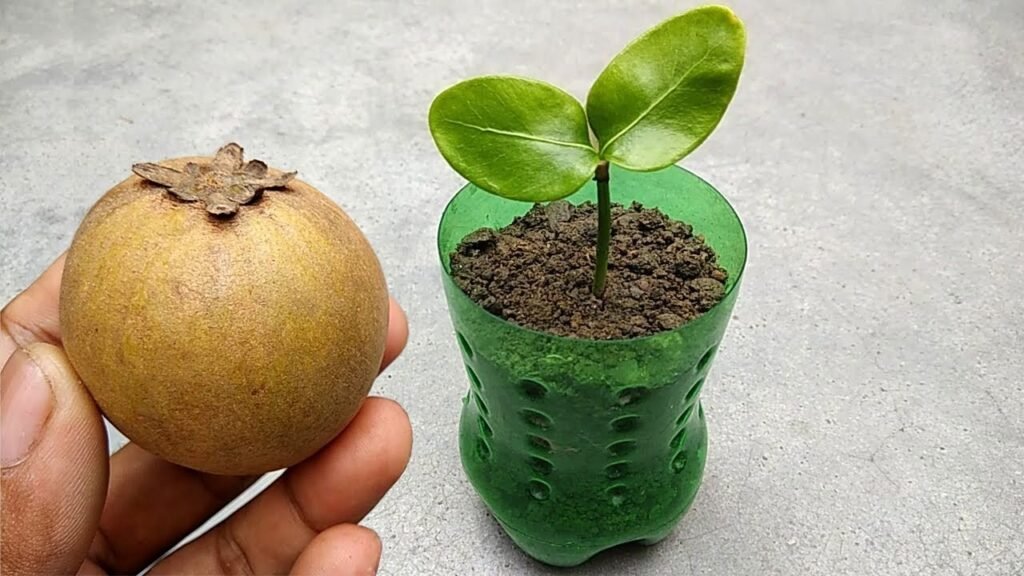
Grafting is one of the best ways to propagate sapodilla for orchards. It combines:
- A strong rootstock
- A high-yielding scion from a mature tree
This ensures excellent growth and reliable fruiting.
🧰 You will need:
- Grafting knife
- Young sapodilla rootstock
- Scion from a productive tree
- Grafting tape
🔧 Types of grafting suitable for sapodilla:
✔ Approach Grafting (Best for Beginners)
Two plants are tied together until they fuse.
✔ Veneer Grafting (Most Popular)
A thin slice is cut on both scion and rootstock, then joined and wrapped.
✔ Cleft Grafting (High Success Rate)
The rootstock is split vertically and the scion is inserted like a wedge.
🍈 Steps for veneer grafting (recommended):
- Choose a healthy rootstock 1–2 cm thick
- Cut a slanted strip on the rootstock
- Cut a matching strip on the scion
- Join the two surfaces
- Wrap tightly with grafting tape
- Keep the plant in shade
- After 30–45 days, new shoots appear
Within a year, the grafted sapodilla becomes strong enough to be planted in the ground.
🍃⭐ 3. Propagating Sapodilla from Cuttings
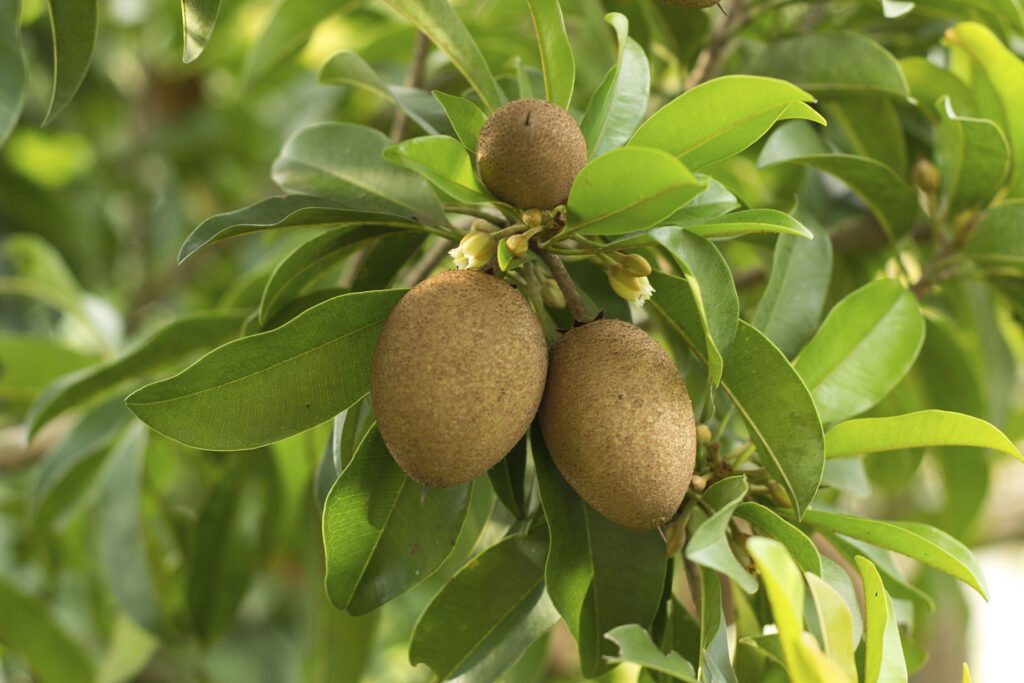
Though not as fast as grafting, sapodilla can be propagated from semi-hardwood cuttings if done carefully.
🧰 You need:
- Healthy branch cuttings (6–8 inches)
- Rooting hormone
- Moist sand or coco peat
- Mist or humidity chamber
🌱 Steps:
- Take cuttings from healthy branches
- Remove lower leaves
- Dip the cut end in rooting hormone
- Plant the cutting in moist coco peat
- Cover with plastic to maintain humidity
- Keep in indirect light
Roots form within 6–10 weeks. Transfer the rooted cutting to a pot when it becomes firm.
🍈🌿 Best Time to Propagate Sapodilla
Timing can significantly increase your success rate.
✔ Best season: Early monsoon
Warm weather + rainfall helps fast rooting.
✔ Secondary seasons:
- Late summer
- Early winter in warm regions
Avoid propagating during extreme heat or heavy winter.
🌞 Care Tips for Newly Propagated Sapodilla Plants
Once your propagated plant establishes roots, proper care ensures healthy growth.
⭐ 1. Provide Filtered Sunlight
New plants prefer indirect light for 1–2 months.
⭐ 2. Water Regularly
Sapodilla loves moisture but hates waterlogging.
⭐ 3. Use Well-Drained Soil
Best mixture:
- 40% garden soil
- 30% compost
- 30% sand or cocopeat
⭐ 4. Add Slow-Release Organic Fertilizer
Cow dung manure or compost every 45 days boosts growth.
⭐ 5. Protect from Pests
Young sapodilla plants may face:
- Leaf miner
- Mealybugs
- Scale insects
Neem oil spray every 15 days helps.
🌳🍈 How Long Before Sapodilla Starts Fruiting?
Propagation method determines fruiting time:
| Method | Time to Fruit |
|---|---|
| Seed-grown | 6–8 years |
| Cuttings | 4–5 years |
| Air Layering | 2–3 years |
| Grafting | 2–3 years |
That’s why grafting and air layering are the preferred choices for farmers and home gardeners.
🥥🍈 Tips to Get Faster, Bigger Sapodilla Harvests
To boost growth and future yield:
✔ Mulch the plant base
Keeps soil moist and reduces weed growth.
✔ Add rock phosphate
Promotes strong root development.
✔ Prune gently
Shape the tree early to improve airflow.
✔ Provide weekly feeding during growing season
Use liquid fertilizers like:
- Banana peel water
- Compost tea
- Seaweed extract
✔ Plant at least 2 trees
Although sapodilla is self-pollinating, having two improves fruit set.
🍈🎉 Final Thoughts: Propagate Sapodilla the Smart Way!
Propagating sapodilla trees is not only easy but extremely rewarding. Whether you choose air layering, grafting, or cuttings, you can develop strong, healthy plants that fruit early and produce sweet, delicious sapodillas year after year.
With the right techniques, a little patience, and proper care, you can transform a single branch into a productive tree that serves your family for decades.
If you want, I can also create: