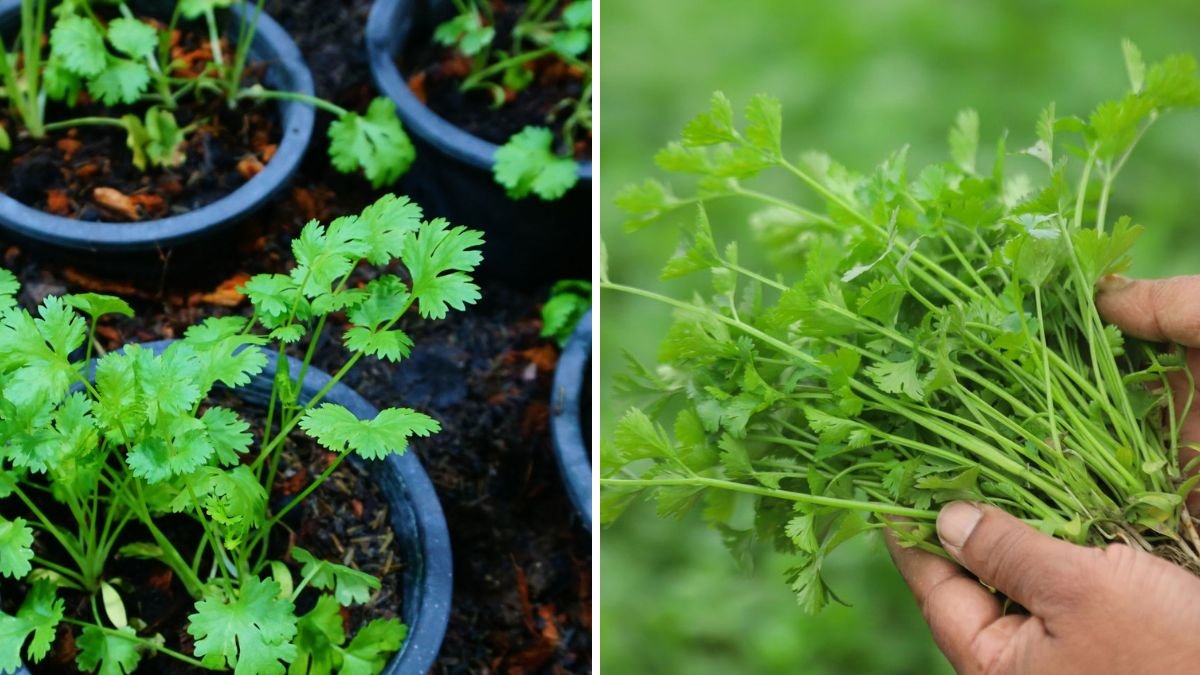
Coriander—also known as dhania—is one of the most commonly used herbs in Indian cooking. Whether it’s for garnishing curries, adding aroma to soups, or preparing chutneys, fresh coriander brings a burst of flavour and fragrance to every dish. The best part? You can easily grow coriander at home, even if you live in a small space or don’t have gardening experience.
This article will guide you through a simple, step-by-step method to grow healthy, lush coriander right at your home—in pots, tubs, or any container of your choice.
🌱 Why Grow Coriander at Home?
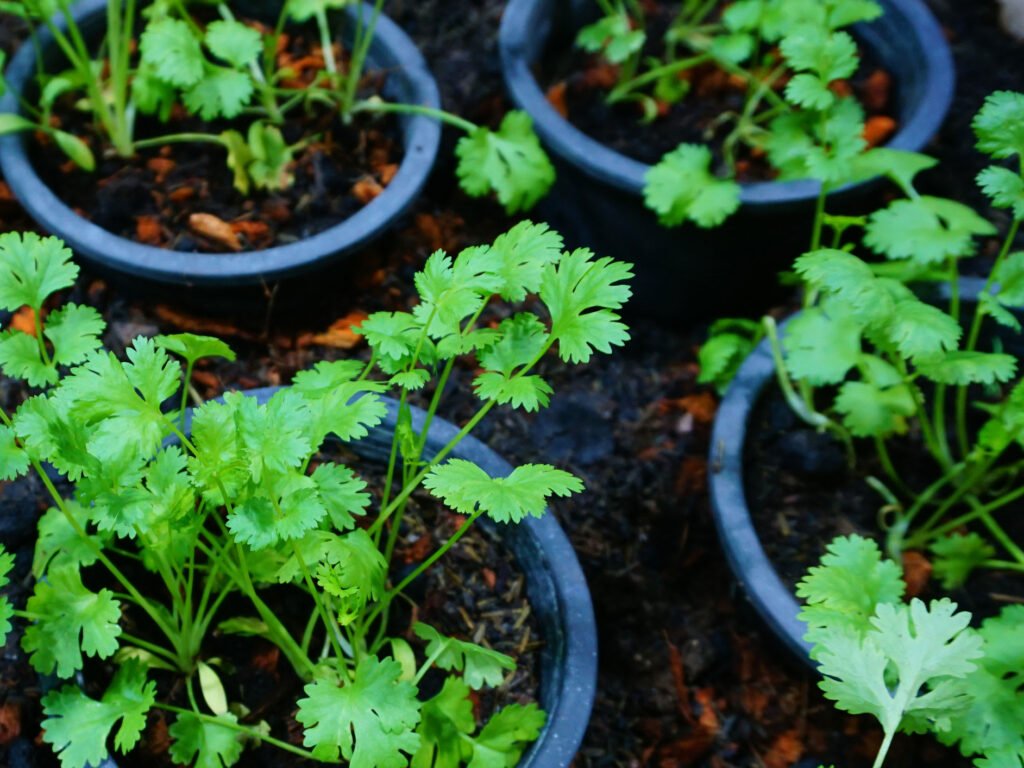
Before learning the growing process, here’s why homegrown coriander is worth your time:
🌿 Fresh and Organic – No chemicals, pesticides, or preservatives.
🌿 Fast Growing – Ready to harvest in just 25–30 days.
🌿 Low Maintenance – Requires minimal care and grows easily indoors or outdoors.
🌿 Space Friendly – Perfect for balconies, terraces, and small homes.
🌿 Cost Effective – Save money by growing your own herb instead of buying bunches daily.
This makes coriander one of the best beginner-friendly plants to start your home garden.
🪴 Step 1: Choosing the Right Pot or Container
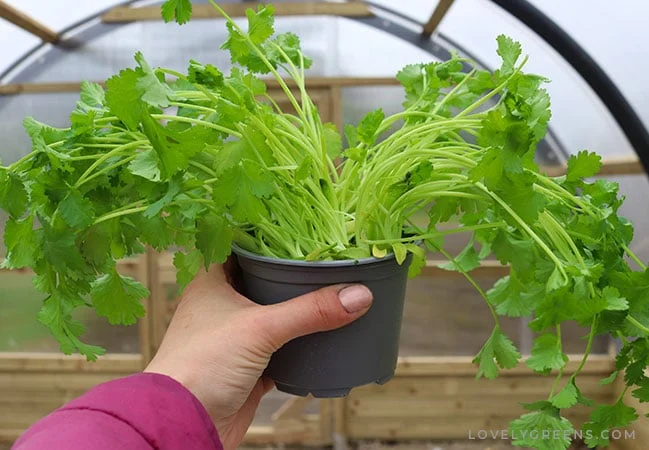
Coriander can grow in almost any container, but for best results:
- Choose a pot 8–12 inches deep (coriander has long taproots).
- Make sure the pot has proper drainage holes.
- You can use plastic tubs, grow bags, earthen pots, or even recycled household items.
👉 Tip: Wider containers give you more leafy coriander than narrow ones.
🌿 Step 2: Preparing the Perfect Soil Mix
Healthy soil = healthy plants. Coriander grows best in loose, well-draining soil.
Here’s the ideal mix:
- 40% garden soil
- 40% compost or vermicompost
- 20% river sand or cocopeat
This blend ensures:
✔ Good aeration
✔ Fast germination
✔ Rich nutrients
✔ Moisture balance
👉 Do not use heavy clay soil, as it stops root growth and reduces the leaf yield.
🌾 Step 3: Preparing Coriander Seeds for Sowing
This is the most important step for guaranteed germination.
Store-bought coriander seeds are usually whole seeds—two seeds stuck together. These will not germinate properly unless you prepare them.
✔ How to prepare seeds:
- Take a handful of seeds.
- Lightly crush them using a rolling pin—just enough to split them into halves.
- Soak the crushed seeds in water for 6–8 hours.
Soaking helps the seeds absorb water, leading to faster and stronger growth.
🌱 Step 4: Sowing the Seeds Properly
Once the seeds are prepared:
- Fill your pot with the soil mix.
- Sprinkle the soaked seeds evenly—don’t overcrowd.
- Gently press them into the soil.
- Cover with a thin layer of soil (½ cm only).
- Water lightly with a spray bottle.
👉 Avoid deep planting. Coriander seeds need light and air to germinate.
💧 Step 5: Watering and Light Requirements
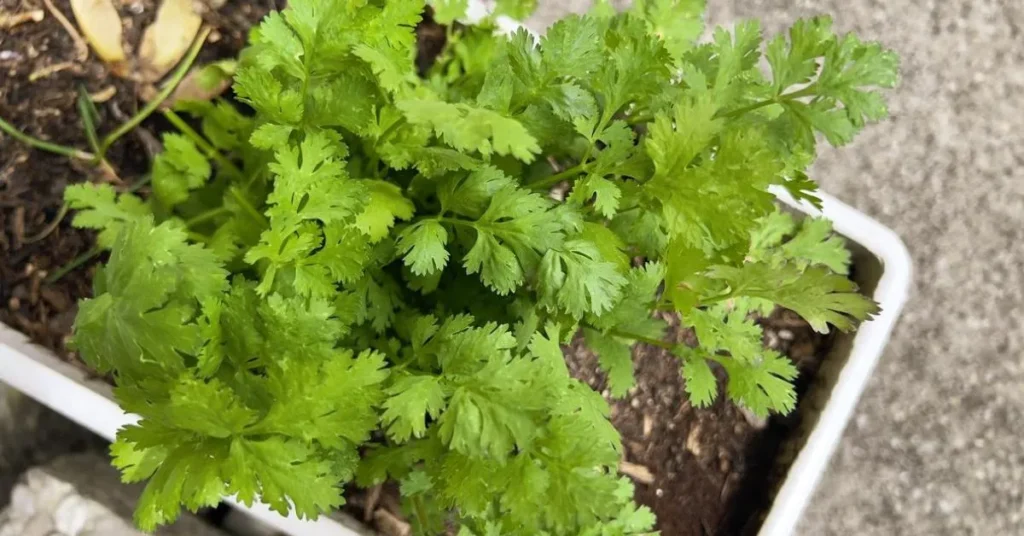
Coriander loves moderate sunlight and moist soil.
🌞 Sunlight
- Requires 3–4 hours of sunlight daily.
- Too much heat will make the plant bolt (produce flowers early).
💧 Watering
- Keep the soil moist but not soggy.
- Water gently twice a day in hot weather.
- Reduce watering during winter or rainy days.
👉 Always use a spray for young seedlings to avoid root damage.
🌱 Step 6: Care Tips for Faster and Lush Growth

Here are some easy care tips that ensure a thick, green coriander crop:
✔ Fertilizing
After 10–12 days, add:
- A handful of compost, or
- Liquid fertilizer like compost tea
This boosts leaf growth and overall plant strength.
✔ Preventing Bolting
Coriander bolts (grows flowers) when stressed.
To avoid this:
- Keep soil moist
- Avoid harsh sunlight
- Do not overcrowd plants
✔ Thinning
If seedlings grow too close together, remove a few to give others enough space.
✔ Pest Control
Coriander generally has very few pests.
If needed, spray neem oil once every 10 days.
🌿 Step 7: Harvesting Your Fresh Coriander Leaves
Coriander is ready to harvest in 25–30 days.
✔ How to Harvest
- Cut the leaves with scissors, leaving 1–2 inches of stem above the soil.
- This allows the plant to regrow and give multiple harvests.
- Avoid pulling the entire plant unless you want fresh roots for cooking.
👉 Harvesting regularly encourages new fresh leaves.
🥗 Uses of Homegrown Coriander
Once you start growing coriander at home, you’ll have endless uses:
- Garnish for curries, dal, and sabzi
- Green chutney
- Soups and salads
- Paratha filling
- Coriander tea (great for digestion!)
- Smoothies and detox drinks
Fresh coriander adds flavour, aroma, and health benefits to every dish.
⭐ Coriander Health Benefits You Shouldn’t Miss
🌿 Improves digestion
🌿 Detoxifies the body
🌿 Rich in antioxidants
🌿 Helps reduce inflammation
🌿 Strengthens immunity
🌿 Boosts heart health
Growing this powerful herb at home gives you fresh, chemical-free greenery every day.
🌼 Why Your Coriander May Fail (Common Mistakes)
Many people struggle with coriander because of these common errors:
❌ Planting seeds too deep
❌ Overwatering
❌ Using heavy soil
❌ Not splitting seeds
❌ Direct harsh sunlight
❌ Overcrowding the seeds
If you avoid these mistakes, your coriander will grow quickly and beautifully.
🌿 Final Thoughts: Coriander Is the Easiest Herb to Grow at Home!
Growing coriander at home is one of the simplest, most rewarding gardening experiences. With just a pot, some seeds, and a little care, you can enjoy fresh, aromatic coriander every day—straight from your garden to your kitchen.
Whether you live in a small apartment or a large home, coriander fits everywhere and grows fast. It’s perfect for beginners, kids, or anyone who loves gardening and fresh herbs.
Start today—plant a handful of seeds, follow this simple routine, and enjoy the joy of fresh homegrown coriander!