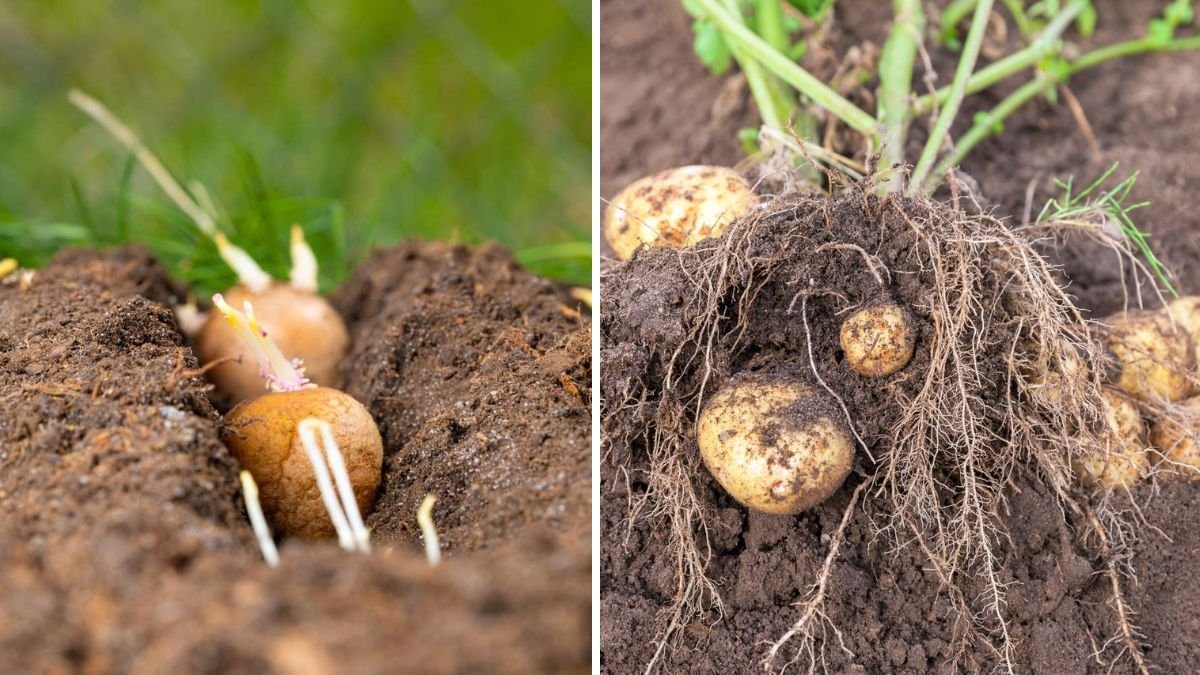
Potatoes are a staple food enjoyed worldwide for their versatility, taste, and nutritional value. From crispy fries to creamy mashed potatoes, they enhance countless dishes. But did you know you can grow potatoes at home easily, even in small spaces like balconies, patios, or backyard gardens? Growing your own potatoes is not only satisfying but also ensures fresh, pesticide-free, and flavorful tubers.
In this comprehensive guide, we’ll cover everything you need to know about growing potatoes at home: selecting seeds, soil preparation, planting, care, and harvesting. With a little effort and patience, you can enjoy your very own bountiful potato harvest within a few months.
Why Grow Potatoes at Home?
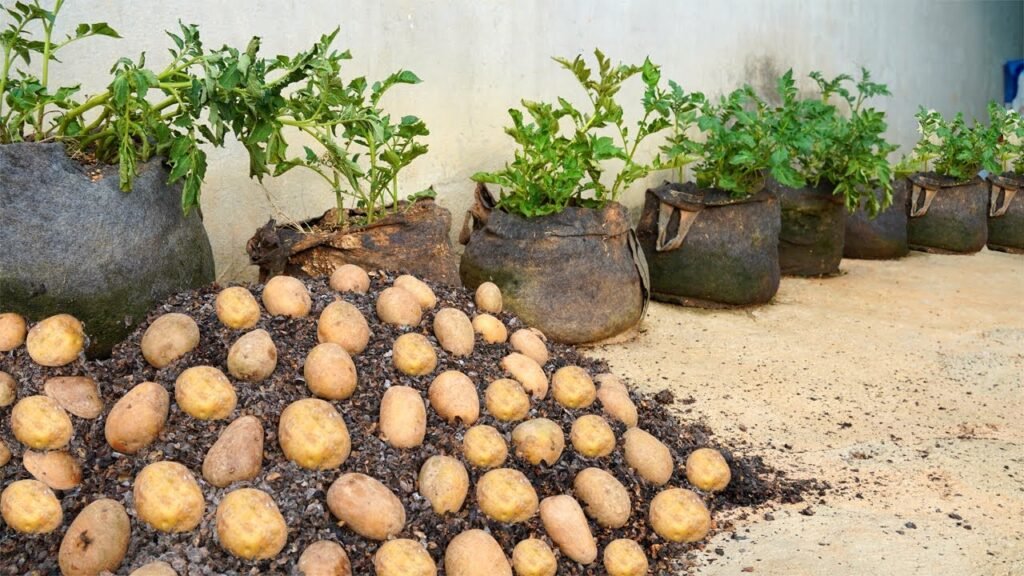
Growing potatoes at home has many benefits:
1. Fresh and Nutritious
Homegrown potatoes are free from chemicals and pesticides, providing a healthier option than store-bought varieties.
2. Cost-Effective
A small investment in seed potatoes or tubers can yield a large harvest, saving money in the long run.
3. Easy to Grow
Potatoes are hardy plants that grow well in various conditions, including containers, raised beds, and garden soil.
4. Fun and Educational
Growing potatoes is a rewarding experience for both adults and children, offering insight into plant growth and sustainable gardening.
5. Continuous Supply
With staggered planting, you can enjoy potatoes throughout the year.
Understanding Potatoes and Their Growth Requirements
Potatoes are tuber crops, meaning the edible part grows underground. To grow them successfully, you need to understand a few key requirements:
- Climate: Potatoes thrive in cool, frost-free conditions (15–25°C).
- Soil: Loose, well-drained, fertile soil rich in organic matter.
- Sunlight: At least 5–6 hours of direct sunlight daily.
- Water: Moderate and consistent watering without waterlogging.
Materials You’ll Need to Grow Potatoes at Home
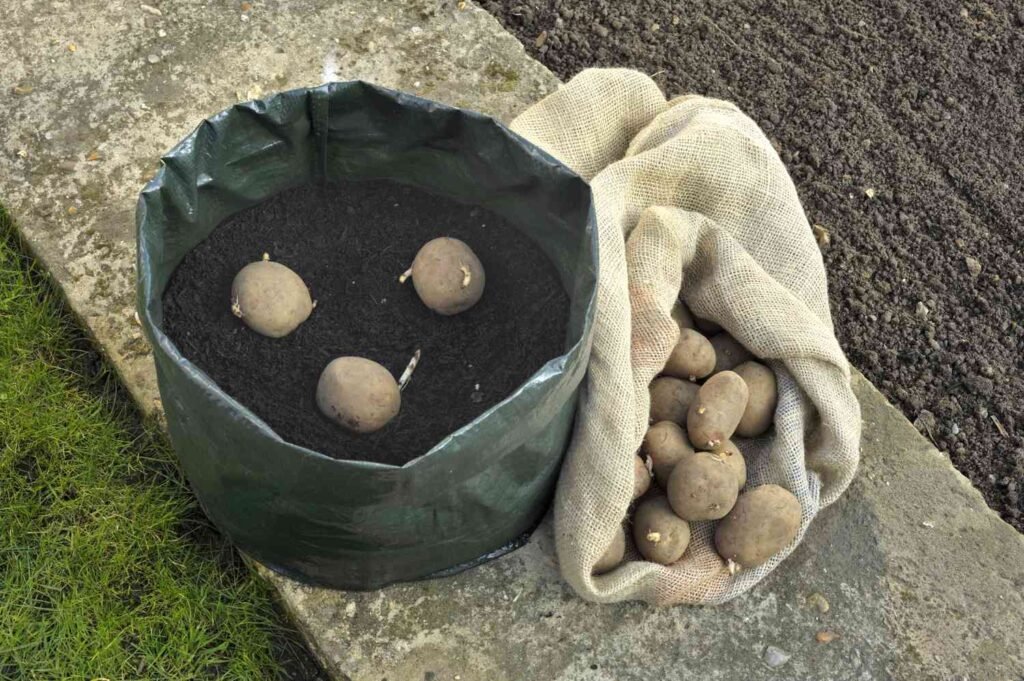
You don’t need much to start growing potatoes. Here’s what you need:
- Seed potatoes or tubers: Certified seed potatoes or small store-bought potatoes.
- Containers or bags: Large pots, grow bags, or baskets with drainage holes.
- Potting mix or garden soil: Nutrient-rich, loose, and well-draining.
- Compost or organic fertilizer: To enrich the soil.
- Mulch (optional): Straw or dry leaves to retain moisture.
- Watering can or hose: For consistent watering.
Step-by-Step Guide: Growing Potatoes at Home Easily
Step 1: Choose the Right Seed Potatoes
- Select healthy, disease-free potatoes.
- Prefer small to medium-sized tubers.
- Avoid sprouting potatoes that are soft or rotten.
- Cut larger tubers into pieces, each with at least 1–2 eyes (buds).
Allow the cut pieces to dry for 24 hours before planting to prevent rotting.
Step 2: Prepare the Containers or Garden Bed
Potatoes grow best in deep containers, raised beds, or grow bags.
- Container depth: Minimum 12–15 inches
- Width: At least 12 inches for multiple tubers
- Add a mix of garden soil, compost, and cocopeat for nutrient-rich soil.
- Ensure proper drainage to prevent waterlogging.
Step 3: Plant the Potatoes
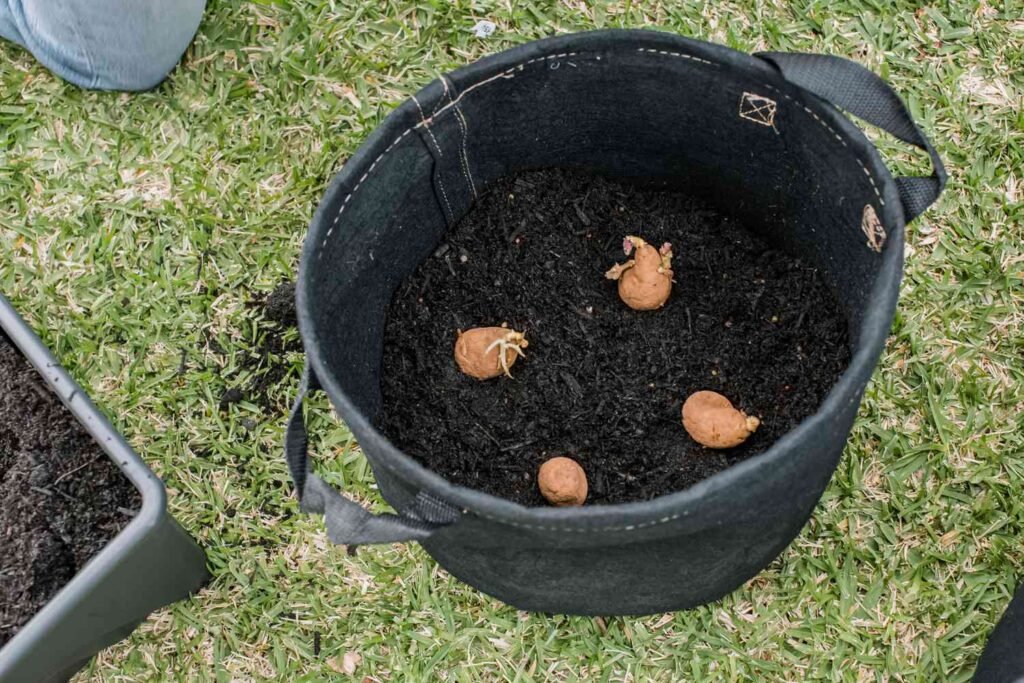
- Fill the container with 4–5 inches of soil.
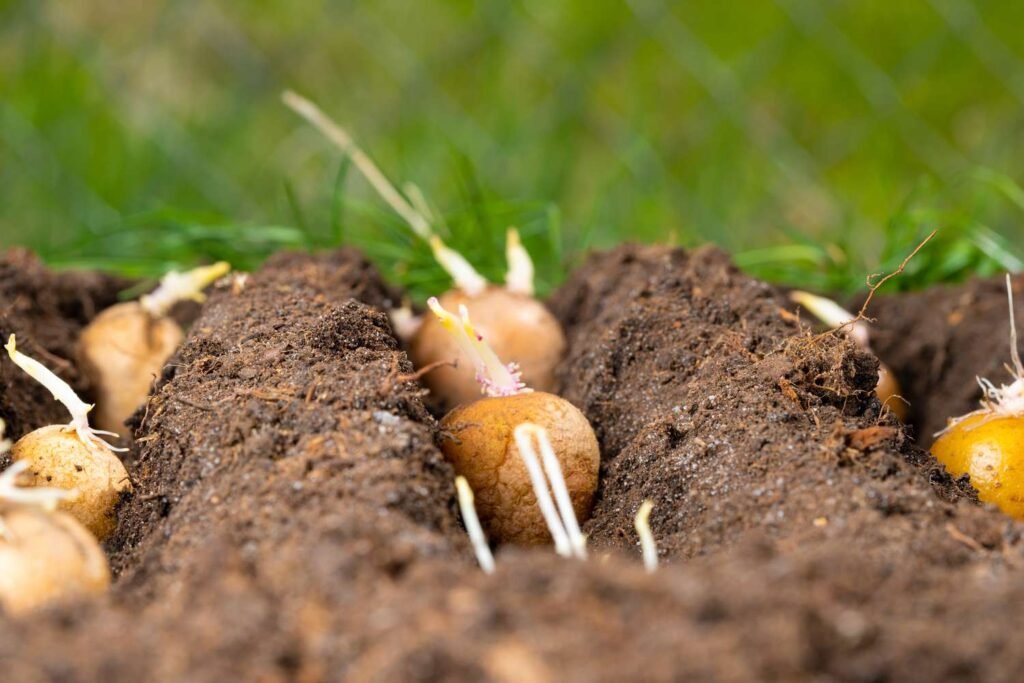
- Place the seed potatoes eye side up.
- Space tubers 4–6 inches apart.
- Cover with 2–3 inches of soil.
As plants grow, you will hill up soil around stems to protect developing tubers and encourage larger yields.
Step 4: Provide the Right Sunlight
- Potatoes need 6–8 hours of sunlight daily.
- Place containers or beds in a sunny spot.
- In extremely hot conditions, provide partial shade to prevent scorching.
Step 5: Watering and Moisture Management
- Water regularly and consistently, keeping the soil moist.
- Avoid overwatering, as it can lead to rotting.
- Mulching with straw or dry leaves helps retain moisture and reduce weeds.
Step 6: Fertilize for Maximum Yield
- Potatoes respond well to organic fertilizers.
- Use compost, vermicompost, or organic liquid fertilizers every 2–3 weeks.
- Avoid excessive nitrogen, which encourages leafy growth but reduces tuber production.
Step 7: Hill Up Soil During Growth
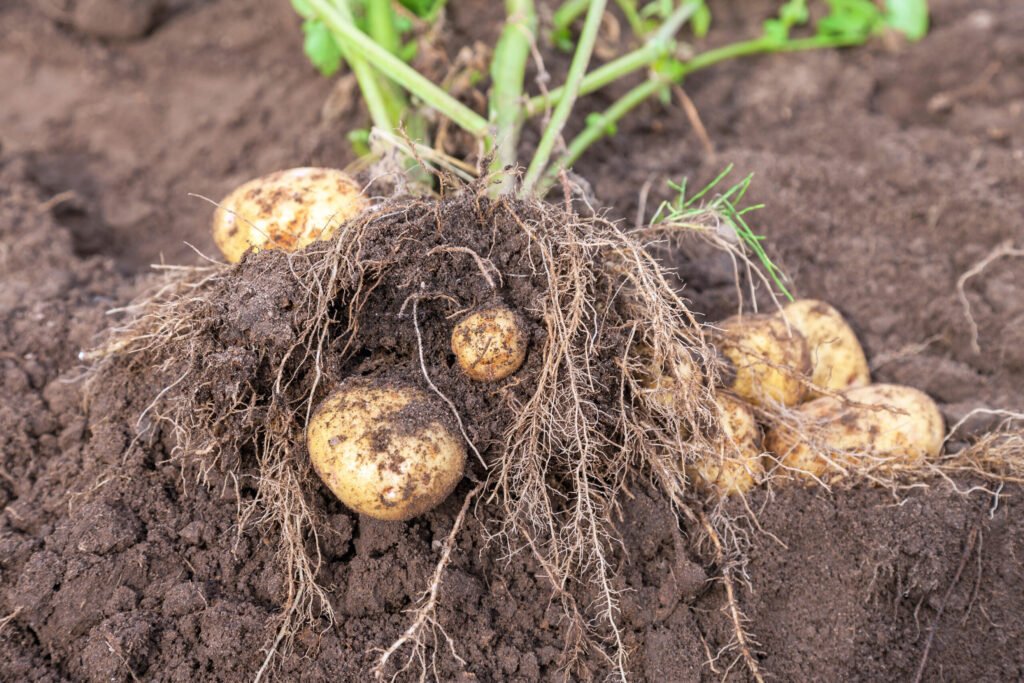
- When potato plants reach 6–8 inches in height, mound additional soil around the base.
- Repeat every few weeks as the plant grows.
- This protects tubers from sunlight and promotes more tuber formation.
Step 8: Monitor for Pests and Diseases
Common issues in potato cultivation include:
- Aphids: Spray neem solution to control.
- Late blight: Remove infected leaves promptly.
- Potato tuber moth: Cover containers with fine mesh if growing in open areas.
Consistent observation and organic pest management ensure healthy plants.
Step 9: Harvesting Potatoes
- Potatoes are ready to harvest 90–120 days after planting depending on variety.
- For new potatoes, harvest when plants start flowering.
- For mature potatoes, wait until foliage turns yellow and begins to die back.
- Gently dig into the soil to collect tubers without damaging them.
Tips to Grow Potatoes Year-Round
- Choose early and late varieties to extend harvest.
- Use staggered planting: Plant new potatoes every 2–3 weeks.
- Protect from frost in winter using mulch or indoor grow setups.
- Rotate containers if growing in pots to prevent soil depletion.
Advantages of Growing Potatoes at Home
- Fresh and chemical-free: Perfect for health-conscious families.
- High yield: Each seed potato can produce multiple tubers.
- Space-efficient: Suitable for small gardens, terraces, and balconies.
- Cost-effective: Save money while enjoying your own harvest.
- Fun and educational: Great for kids and gardening enthusiasts to learn plant growth.
Common Mistakes to Avoid
- Planting in poor soil: Loose, nutrient-poor soil reduces tuber growth.
- Overwatering: Leads to rot and fungal diseases.
- Not hilling soil: Exposed tubers turn green and bitter.
- Ignoring pests: Early control is key to healthy yield.
- Harvesting too early: Tubers will be small and underdeveloped.
Creative Ways to Grow Potatoes in Small Spaces
- Grow bags: Stackable, portable, and ideal for terraces.
- Vertical planters: Save floor space and allow easy drainage.
- Plastic buckets or drums: Drill drainage holes and use soil layers.
- Indoor cultivation: Use large pots near sunlight or with grow lights for winter planting.
Why Every Home Gardener Should Grow Potatoes
Potatoes are easy to grow, highly rewarding, and versatile in the kitchen. By growing them at home, you can:
- Control the quality and safety of your food
- Reduce dependence on store-bought potatoes
- Experiment with different potato varieties
- Enjoy the satisfaction of harvesting your own food
Even with minimal space, anyone can grow potatoes and enjoy the taste and nutrition of homegrown tubers.
Final Thoughts
Growing potatoes at home is not only simple but also incredibly satisfying. By following these steps—choosing healthy seed potatoes, preparing soil, planting correctly, and providing proper care—you can enjoy delicious, fresh, and chemical-free potatoes right from your garden or balcony.
With a little patience and regular maintenance, you can create a continuous potato harvest that will enhance your meals, save money, and give you the joy of home gardening. Whether you are a beginner or an experienced gardener, potatoes are one of the most rewarding crops to grow at home.
Start today and turn your garden, balcony, or terrace into a homegrown potato paradise! 🥔🌿