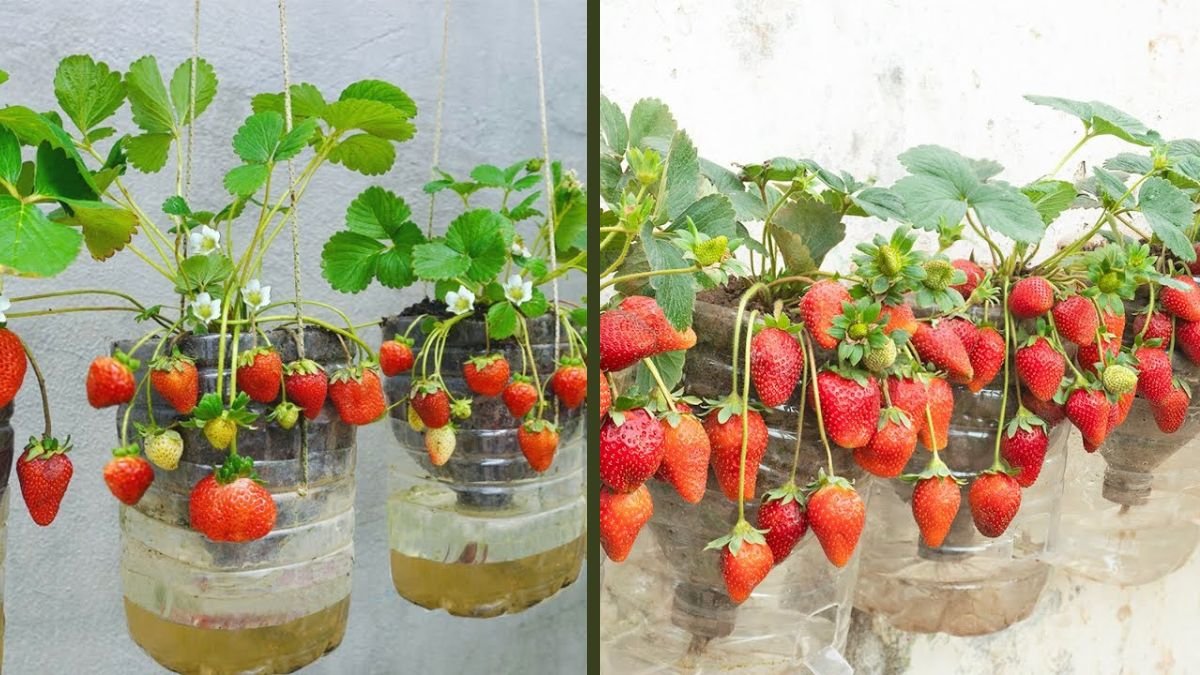
Introduction: Why Hanging Baskets Are Perfect for Strawberries
Growing strawberries at home is a dream for many gardeners, but lack of space often becomes a problem. Hanging baskets provide a smart solution by using vertical space efficiently. This method allows strawberries to grow clean, healthy, and free from soil pests. Hanging baskets also improve air circulation around plants. With the right care, strawberries thrive beautifully in baskets. This easy DIY method works well for balconies, terraces, and even sunny windows. Anyone can enjoy fresh strawberries without a garden.
Benefits of Growing Strawberries in Hanging Baskets
Hanging baskets keep strawberry fruits off the ground, preventing rot and disease. They reduce pest attacks such as slugs and ants. Airflow remains excellent, lowering fungal issues. Hanging baskets also receive sunlight from all sides. This results in evenly ripened fruits. They are easy to maintain and visually attractive. Hanging strawberries add beauty and productivity to small spaces.
Choosing the Right Strawberry Variety
Not all strawberry varieties perform well in hanging baskets. Compact and trailing varieties are the best choice. Everbearing and day-neutral varieties produce fruits continuously. These varieties adapt well to container environments. Healthy runners or seedlings ensure faster establishment. Choosing the right variety directly impacts yield and fruit quality. This step is crucial for success.
Selecting the Best Hanging Basket
The basket should be at least twelve inches deep. Strong drainage holes are essential to prevent waterlogging. Lightweight plastic or fiber baskets work best. Baskets must support soil weight comfortably. Sturdy hooks and chains ensure safety. Proper basket selection helps roots grow freely and stay healthy.
Preparing the Ideal Soil Mix
Strawberries prefer loose, airy, and well-drained soil. A mix of garden soil, compost, and cocopeat works well. Vermicompost adds organic nutrients. Avoid heavy clay soil that holds excess water. Good soil structure promotes strong root development. Healthy roots lead to better flowering and fruiting.
Planting Strawberries in Hanging Baskets
Plant strawberries carefully to avoid damaging roots. Keep the crown slightly above the soil surface. Do not bury the crown deeply. Space plants evenly to allow airflow. Water lightly after planting. Keep baskets in shade for two days. This helps plants adjust without stress.
Sunlight Requirements for Hanging Strawberries
Strawberries need at least five to six hours of sunlight daily. Morning sunlight is ideal for healthy growth. Hanging baskets allow easy repositioning. Rotate baskets for even light exposure. Insufficient sunlight reduces sweetness and yield. Proper light results in bright red and flavorful fruits.
Watering Schedule for Best Results
Hanging baskets dry faster than ground containers. Water regularly but avoid overwatering. Ensure excess water drains freely. Early morning watering is recommended. Consistent moisture keeps fruits juicy. Balanced watering prevents root rot and flower drop.
Organic Fertilization for Continuous Harvest
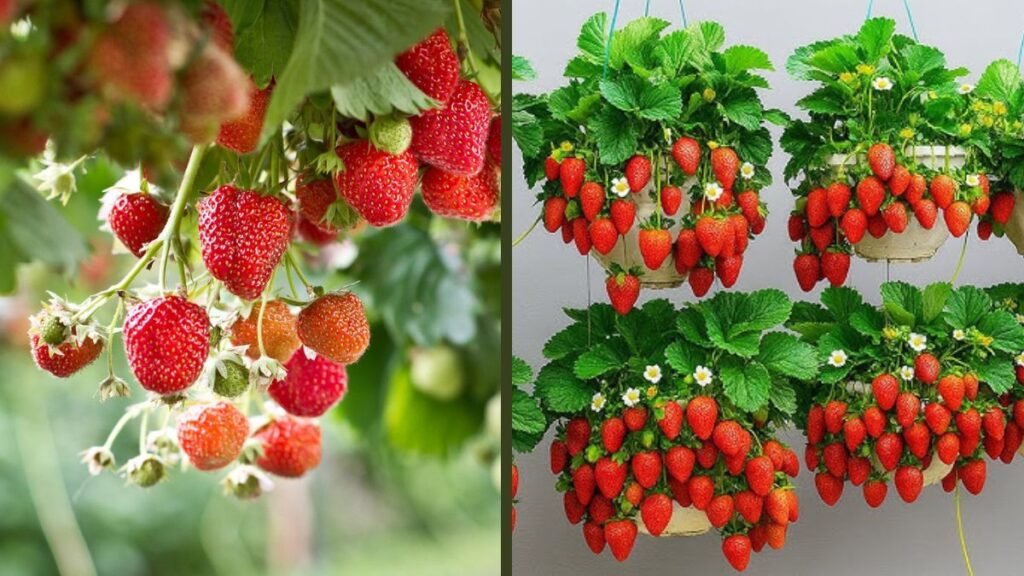
Apply liquid compost every ten days. During flowering, potassium-rich organic fertilizer works best. Avoid excessive nitrogen, which increases leaves but reduces fruits. Organic feeding improves fruit taste and size. Regular nutrition ensures continuous flowering and fruiting.
Pollination Tips for Hanging Baskets
Strawberries are self-pollinating but benefit from airflow. Gentle shaking during flowering improves pollination. Morning hours are best for this practice. Better pollination results in well-shaped fruits. This simple technique increases yield naturally.
Pruning and Runner Management
Strawberries produce runners that consume energy. Remove extra runners regularly. Trim old and yellow leaves. Pruning improves airflow and reduces disease. Healthy plants focus more energy on fruit production. This leads to bigger and sweeter strawberries.
Pest and Disease Prevention
Hanging baskets naturally reduce pest problems. Neem oil spray once a week is effective. Remove affected leaves immediately. Good airflow prevents fungal infections. Clean surroundings help maintain healthy plants. Prevention ensures long-term productivity.
Mulching for Better Moisture Retention
Light mulching helps retain soil moisture. Coco husk or dry straw works well. Mulching prevents soil from drying quickly. It also keeps fruits clean. Temperature remains stable around roots. Mulching improves overall fruit quality.
Harvesting Strawberries at the Right Time
Harvest strawberries when they are fully red. Pick gently to avoid damaging plants. Morning harvesting preserves freshness. Regular harvesting encourages more fruits. Freshly picked strawberries taste the best.
Storage and Usage Tips
Fresh strawberries should be consumed quickly. Refrigeration is suitable for short storage. Wash only before use. Homegrown strawberries have superior flavor. Minimal storage ensures best taste and nutrition.
Common Mistakes to Avoid
Overwatering is a common mistake. Poor sunlight reduces yield. Crowded planting causes disease. Ignoring fertilization limits fruit size. Avoiding these mistakes ensures success.
Table: Hanging Basket Strawberry Growing Guide
Basket depth – At least twelve inches
Sunlight – Five to six hours daily
Soil mix – Loose, compost-rich, well-drained
Watering – Regular and controlled
Fertilizer – Organic liquid feed
Harvest cycle – Continuous
Why Hanging Baskets Work So Well
Vertical growing improves airflow and light exposure. Fruits remain clean and pest-free. Space is used efficiently. Maintenance becomes easier. Yield improves naturally. Hanging baskets are ideal for urban homes.
Conclusion
Growing strawberries in hanging baskets is simple and rewarding. This easy DIY method works perfectly without a garden. With proper care, anyone can enjoy sweet strawberries at home. Start today and transform your space into a strawberry haven.