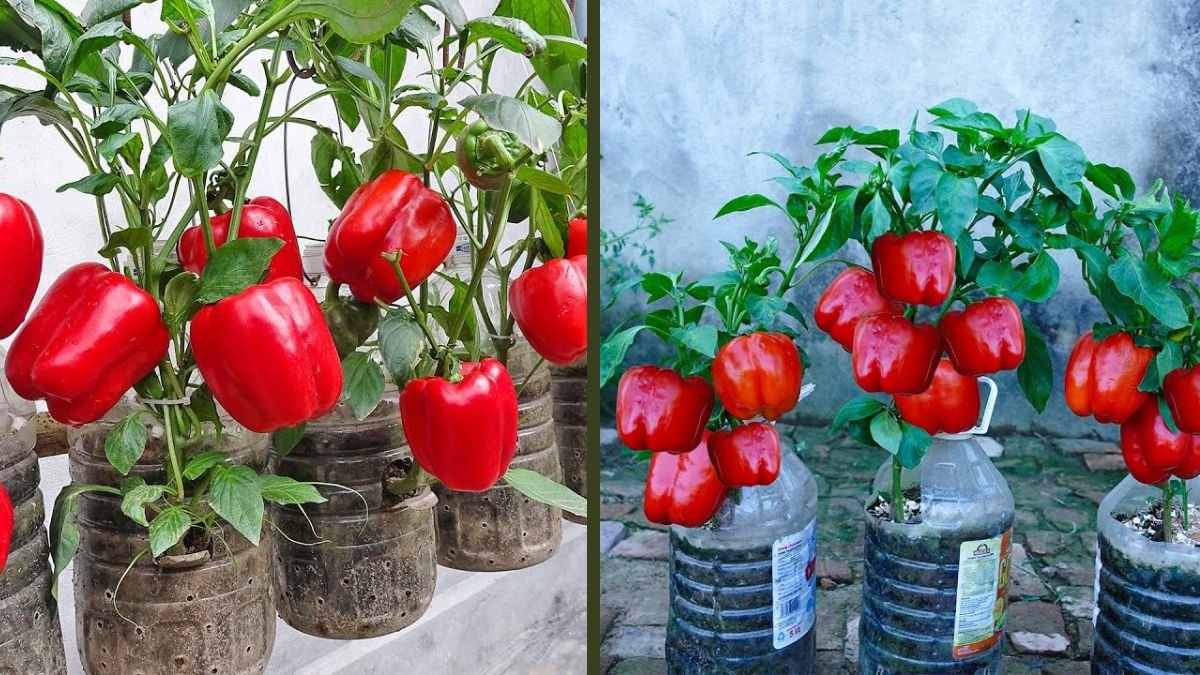
Introduction: Growing Peppers Without a Garden
Many people believe peppers require large gardens to grow well. In reality, peppers thrive even in small spaces when grown smartly. Hanging bottle gardening is an innovative solution for urban homes. This method allows anyone to grow peppers on balconies, rooftops, or windows. Peppers love sunlight and airflow, which hanging systems provide. Recycled bottles reduce costs and environmental waste. With correct care, hanging bottles can produce heavy yields. This guide explains how to grow tons of peppers without a traditional garden.
Why Hanging Bottles Are Perfect for Peppers
Hanging bottles save floor space and allow vertical gardening. Air circulation around plants reduces disease risk. Bottles warm up quickly, helping faster growth. Water drainage is easy to manage. Plants receive uniform sunlight exposure. Hanging systems reduce pest attacks from soil insects. Bottles can be moved easily if needed. This method is ideal for small homes and apartments.
Choosing the Right Bottles
Use strong plastic bottles of 2 to 3 liters. Thicker bottles last longer outdoors. Clean bottles thoroughly before planting. Cut side openings large enough for roots. Create drainage holes at the bottom. Transparent bottles help monitor moisture. Avoid weak or cracked bottles. Proper bottle selection ensures plant stability.
Best Pepper Varieties for Hanging Bottles
Chili peppers, bell peppers, and mini sweet peppers grow well. Compact varieties perform best in containers. Choose disease-resistant seeds. Local varieties adapt better to climate. Avoid large bush varieties. Healthy seedlings produce early fruits. Proper variety selection increases yield. Choose peppers known for container success.
Soil Preparation for High Yield
Peppers need loose, fertile, well-draining soil. Mix garden soil, compost, cocopeat, and sand. Organic matter improves nutrient availability. Good drainage prevents root rot. Slight moisture retention supports growth. Avoid heavy clay soil. Healthy soil supports flowering. Proper soil preparation boosts fruit production.
Planting Peppers in Hanging Bottles
Plant one pepper seedling per bottle. Place roots gently inside soil. Keep the stem upright. Firm soil lightly around roots. Water immediately after planting. Correct spacing prevents overcrowding. Proper planting reduces transplant shock. Healthy planting ensures strong growth.
Watering Techniques for Hanging Systems
Hanging bottles dry faster than ground pots. Water regularly but avoid waterlogging. Morning watering is ideal. Check moisture daily in hot weather. Mulching helps retain moisture. Ensure excess water drains out. Balanced watering prevents flower drop. Proper hydration increases fruit size.
Sunlight Requirements
Peppers need at least six to eight hours of sunlight. Hang bottles in sunny locations. Rotate bottles for even exposure. Insufficient light reduces flowering. Morning sunlight is most beneficial. Sunlight enhances color and flavor. Good light also reduces pests. Sun management is crucial for yield.
Fertilizing for Continuous Fruiting
Use organic fertilizers every two weeks. Compost tea and vermicompost work well. Avoid excess nitrogen. Balanced nutrients encourage flowering. Potassium improves fruit size. Phosphorus strengthens roots. Regular feeding supports long harvest periods. Proper fertilization ensures heavy yields.
Pruning and Training Peppers
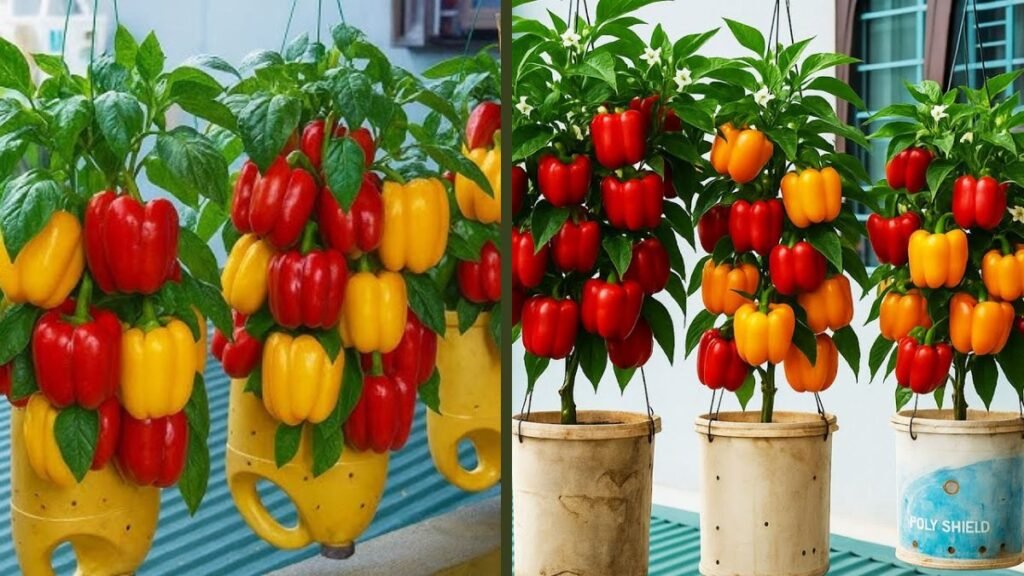
Remove weak branches and yellow leaves. Pruning improves airflow. Focus energy on fruiting branches. Light pruning prevents overcrowding. Hanging plants benefit from balanced shape. Proper pruning increases sunlight penetration. Healthy plants produce more peppers. Controlled growth improves productivity.
Flowering and Pollination
Pepper flowers are self-pollinating. Gentle shaking helps pollination. Outdoor airflow assists naturally. Healthy flowers lead to better fruit set. Nutrient balance prevents flower drop. Stress-free plants flower more. Proper care improves pollination success. Flower management boosts yield.
Managing Pests and Diseases
Common pests include aphids and mites. Inspect plants weekly. Use neem oil spray. Remove infected leaves immediately. Good airflow prevents fungal diseases. Avoid chemical pesticides. Healthy plants resist pests better. Preventive care ensures clean harvests.
Fruit Development and Care
Peppers grow steadily after flowering. Support branches if heavy with fruits. Maintain consistent watering. Avoid stress during fruiting stage. Harvest peppers at proper maturity. Regular harvesting encourages more fruits. Healthy plants produce continuously. Proper care improves fruit quality.
Vertical Arrangement for Maximum Yield
Hang bottles at different heights. Ensure equal sunlight exposure. Maintain proper spacing. Vertical gardening increases plant count. Easy access simplifies maintenance. Decorative setups enhance appearance. Vertical systems improve productivity. This method maximizes limited space.
Harvesting Peppers Correctly
Harvest peppers when fully colored. Use scissors to avoid damage. Morning harvest preserves freshness. Frequent harvesting increases yield. Avoid pulling fruits forcefully. Proper harvesting extends plant life. Fresh peppers taste best. Timely harvest improves quality.
Growth Overview Table
| Growth Stage | Duration | Key Care |
|---|---|---|
| Seedling | 10–14 days | Moist soil |
| Vegetative | 3–4 weeks | Sunlight |
| Flowering | 2 weeks | Fertilizer |
| Fruiting | Continuous | Harvesting |
Common Mistakes to Avoid
Overwatering causes root rot. Poor sunlight reduces yield. Skipping fertilization weakens plants. Crowding bottles restricts airflow. Ignoring pests reduces harvest. Using weak bottles risks falling. Avoid these mistakes. Correct care ensures success.
Why Hanging Bottle Gardening Works
Roots receive focused nutrients. Airflow reduces disease pressure. Sun exposure is maximized. Water control is easier. Pests are minimized. Vertical growth saves space. Maintenance becomes simple. Results are reliable and impressive.
Seasonal Tips for Pepper Success
Grow peppers in warm seasons. Protect from heavy rain. Provide shade during extreme heat. Adjust watering during weather changes. Seasonal care improves yield. Climate awareness boosts productivity. Timely planting ensures success. Seasonal planning is important.
Final Conclusion
Growing peppers in hanging bottles is perfect for homes without gardens. This method is low-cost, eco-friendly, and highly productive. With proper soil, sunlight, and care, plants produce heavy harvests. Hanging bottle gardening transforms small spaces into food-producing areas. Anyone can enjoy fresh peppers at home using this smart technique.