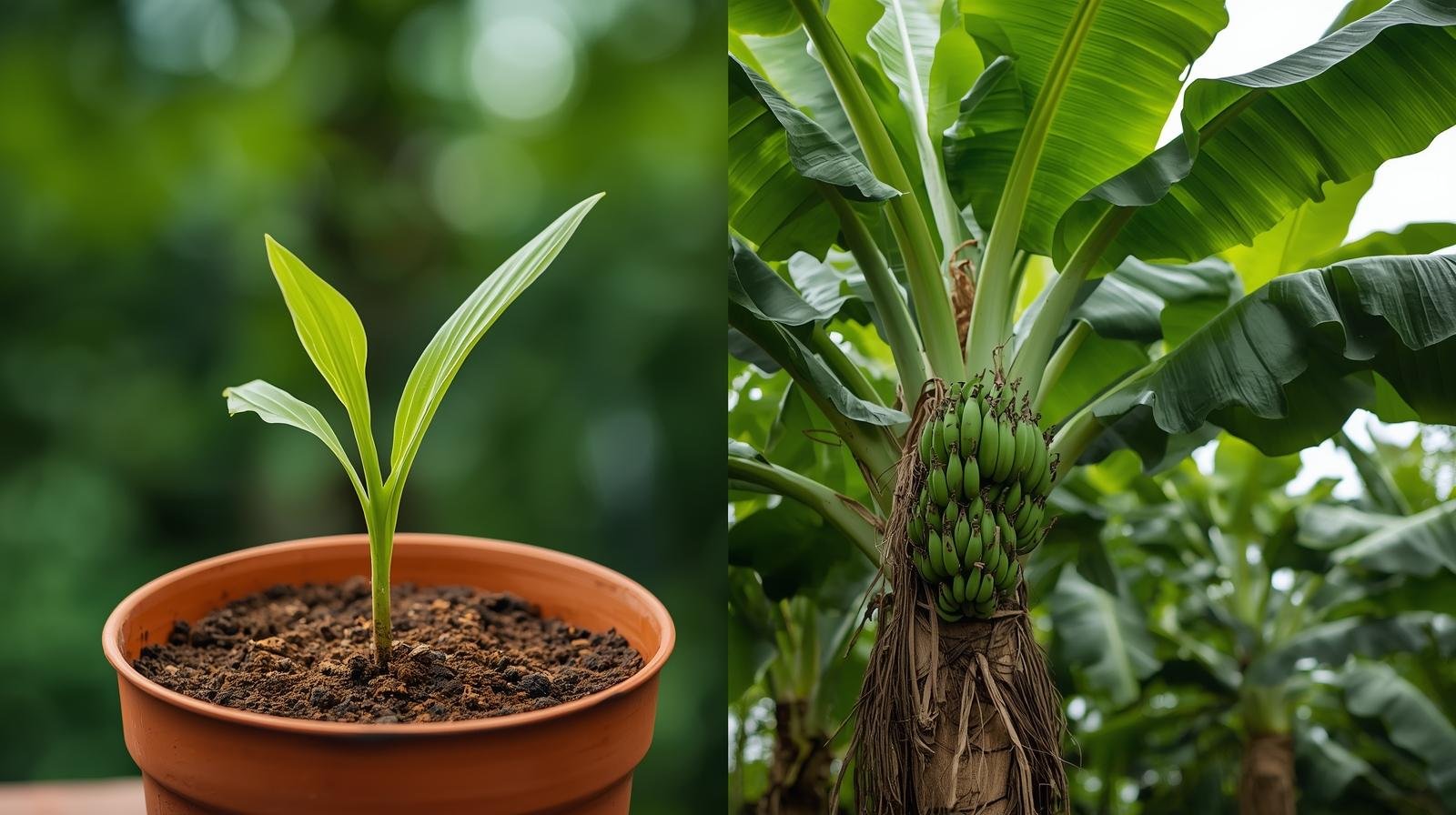
Introduction: Watching Banana Growth
Banana plants grow remarkably fast under proper care. Observing their development over 180 days is exciting and informative. Early months determine root and leaf health. Container or garden growth allows monitoring. Rapid growth adds aesthetic value to gardens or rooftops. Nutrient management and watering influence overall speed. Patience and careful observation enhance success. Homegrown bananas provide both food and greenery. Time-lapse tracking helps plan maintenance tasks. Following a structured care plan ensures strong, healthy plants.
Day 1 to 15: Seed or Sucker Planting
Plant banana seeds, suckers, or small rhizomes in prepared soil. Ensure drainage and fertile compost-rich soil. Water lightly to maintain moisture. Keep plants in indirect sunlight initially. Container plants need frequent moisture checks. Avoid overwatering to prevent root rot. Support young shoots as needed. Monitor daily for sprouting. Early planting sets foundation for growth. Observation ensures healthy start.
Day 16 to 30: Initial Root and Shoot Growth
Roots begin anchoring in soil. Shoots develop above ground. Maintain consistent moisture. Provide bright, indirect sunlight. Fertilizer can be applied lightly. Remove damaged leaves promptly. Rotate container for even growth. Monitor pest presence. Early root establishment ensures plant stability. Strong seedlings respond better to care.
Day 31 to 60: Leaf Expansion
Plants produce larger leaves. Stem thickens for support. Continue regular watering and feeding. Prune damaged or yellow leaves. Maintain airflow around container plants. Support taller seedlings with stakes. Monitor for fungal issues. Adjust sunlight gradually. Healthy leaves improve photosynthesis. Leaf expansion boosts plant vigor.
Day 61 to 90: Stem Strengthening
Stem becomes sturdy, capable of supporting larger leaves. Fertilization enhances growth. Water deeply but avoid saturation. Prune weak lateral shoots. Check for pests regularly. Container plants may require repotting soon. Rotate pots for even growth. Monitor leaf orientation and color. Adequate sunlight supports stem thickening. Plants develop tropical appearance.
Day 91 to 120: Flower Bud Formation
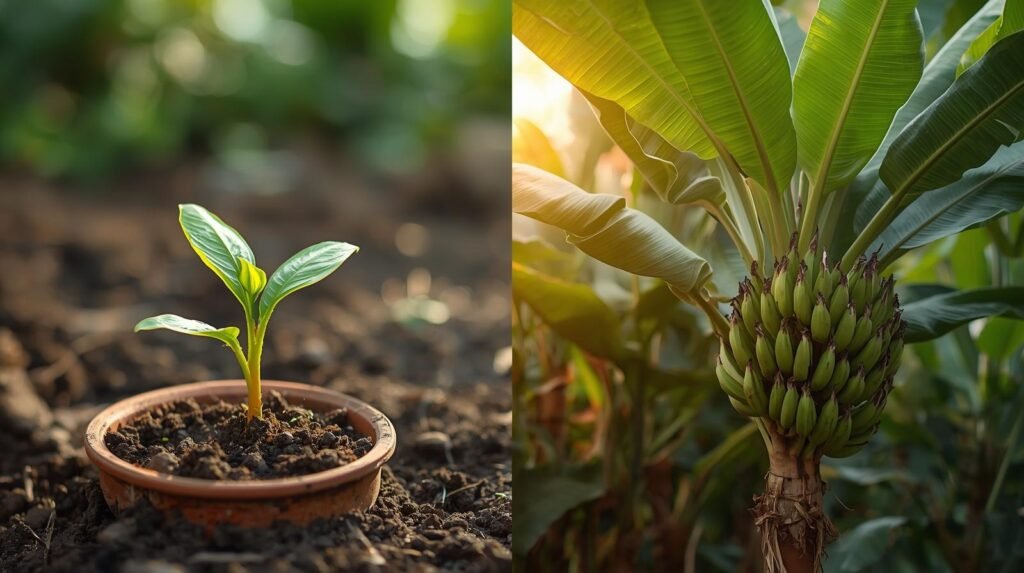
Banana plants may initiate flower buds. Ensure nutrient-rich soil. Water and sunlight remain critical. Support plant for developing height. Monitor for pests targeting buds. Container stability is important. Observe bud size and development. Protect from wind or extreme heat. Flowers indicate upcoming fruit. Proper care ensures healthy blooms.
Day 121 to 150: Flowering Stage
Banana plants display flowering clusters. Fertilize with potassium-rich nutrients. Maintain humidity and warmth. Water regularly but avoid waterlogging. Monitor for pests like aphids or mites. Support branches if heavy flower clusters form. Rotate container for even light exposure. Ensure airflow to prevent fungal growth. Healthy flowering supports fruit production. Observe plant for optimal bloom.
Day 151 to 180: Fruit Formation
Banana hands start forming under flower clusters. Ensure adequate sunlight and nutrients. Continue watering consistently. Mulch helps retain soil moisture. Container plants may need pruning of old leaves. Monitor for pests and diseases. Support heavy fruit clusters. Adjust care according to growth rate. Healthy fruit formation ensures eventual harvest. Observe for size and color development.
Key Growth Factors Table
Growth Stage
Focus
Watering
Sunlight
Fertilizer
Day 1 to 15
Planting and initial sprouting
Moist
Indirect, bright
None or light feed
Day 16 to 60
Root and leaf growth
Moist, avoid saturation
Bright indirect
Light balanced fertilizer
Day 61 to 120
Stem and bud formation
Deep watering
Six to eight hours
Potassium and nitrogen-rich feed
Day 121 to 180
Flowering and fruiting
Consistent moisture
Full sun gradually
Potassium-rich fertilizer
Observations and Tips
Banana plants grow fastest in warm, humid conditions. Regular pruning enhances airflow and leaf health. Container plants need frequent monitoring. Fertilization supports leaf, flower, and fruit development. Sunlight influences stem and leaf growth. Mulching retains moisture and nutrients. Stakes prevent tipping of tall seedlings. Pests are manageable with organic sprays. Early attention prevents major issues. Patience rewards with rapid, healthy growth.
Benefits of Monitoring Banana Growth
Time-lapse tracking helps understand growth patterns. Allows early problem detection. Improves fertilization timing. Observes flowering and fruiting stages. Enhances container management. Provides visual record of plant progress. Encourages learning about tropical plant behavior. Assists in planning care and maintenance. Improves fruit yield quality. Makes gardening rewarding and educational.
Conclusion
Growing banana plants at home is achievable in both containers and gardens. Following a structured 180-day plan ensures healthy leaves, stems, and fruits. Proper watering, sunlight, fertilization, and pest management are essential. Container or rooftop growth provides flexibility. Patience and monitoring lead to successful banana cultivation. Observing growth stages helps plan care tasks. Healthy bananas provide fresh fruit and tropical greenery. Early months determine long-term success. Consistency ensures thriving plants. Homegrown bananas are both ornamental and productive.