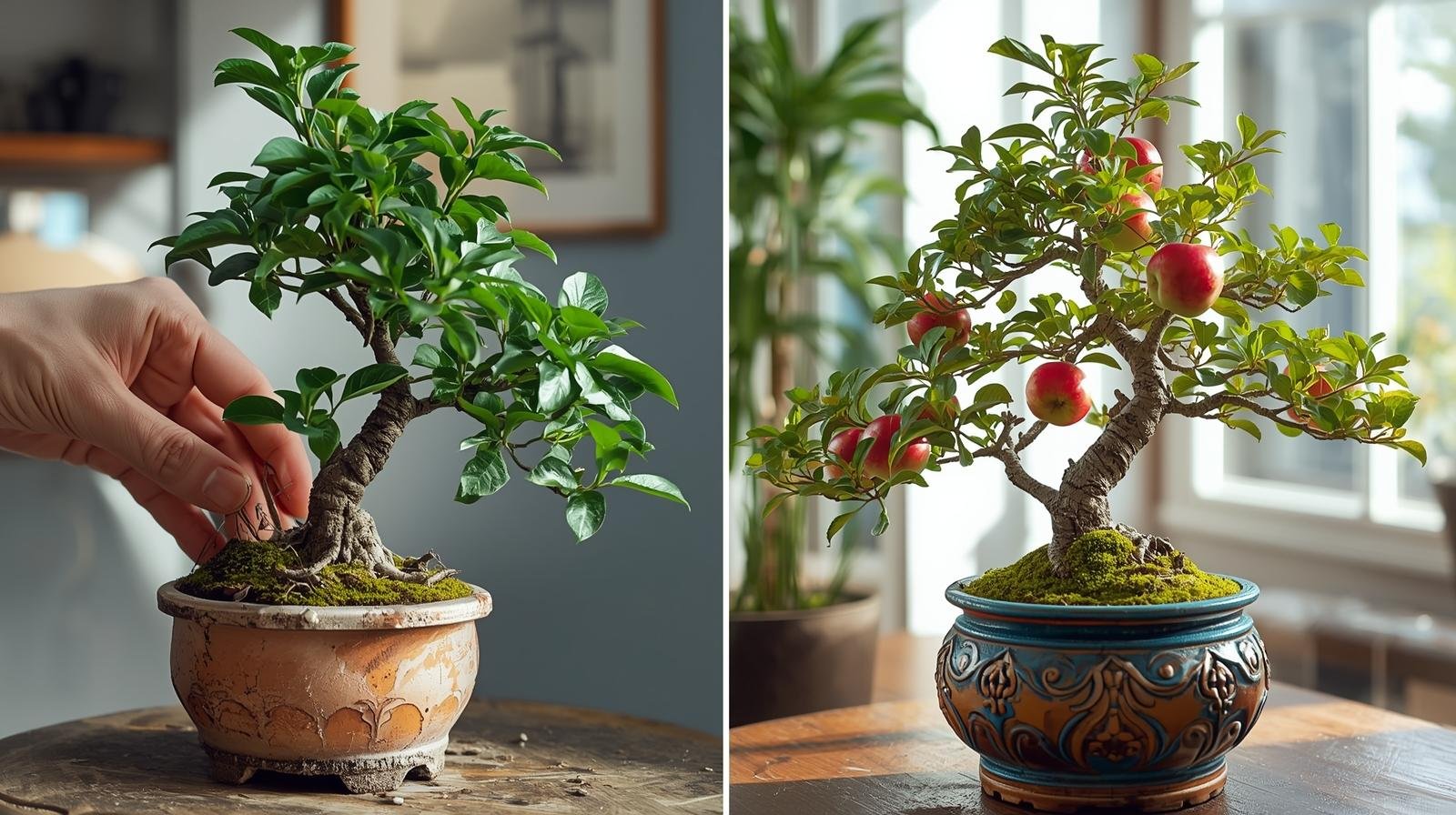
Introduction: The Art of Apple Bonsai
Apple bonsai trees are miniature versions of full apple trees. Pot changing is a critical part of bonsai care. Bonsai cultivators enjoy controlling growth, shaping, and flowering. Apple bonsai produces blossoms and even small fruits in proper conditions. Patience, observation, and technique are essential. Bonsai practice combines gardening with artistry. Regular maintenance ensures longevity. Understanding the lifecycle helps in shaping and flowering. Bonsai brings beauty and organic practice indoors.
Choosing the Right Apple Bonsai Tree
Select a healthy apple bonsai with strong roots. Look for balanced leaf growth and compact structure. Avoid stressed or diseased plants. Choose dwarf apple varieties for easier management. Younger trees adapt better to pot changes. Healthy specimens ensure long-term survival. Selection impacts flowering and fruiting potential. Proper choice simplifies care. Quality trees lead to successful bonsai practice.
Selecting a Suitable Pot
Pot size affects root growth and tree stability. Choose pots slightly larger than root ball for transplanting. Drainage holes prevent waterlogging. Shallow bonsai pots limit growth, preserving miniature shape. Consider aesthetic and material for indoor display. Avoid overly deep containers. Pot style complements tree form. Proper selection promotes health and design harmony.
Preparing the Soil Mix
Use well-draining soil suitable for bonsai. Combine akadama, pumice, and organic compost. Avoid dense garden soil. Soil should retain moisture yet allow air to reach roots. Nutrient-rich soil encourages flowering. Proper soil supports root adaptation after pot change. Maintain balanced pH levels. Preparing soil carefully ensures tree survival.
Removing the Bonsai from Its Current Pot
Gently loosen roots and remove soil carefully. Avoid damaging fine feeder roots. Inspect roots for rot or pests. Trim damaged or excessive roots. Maintain tree balance during handling. Minimize stress to prevent leaf drop. Proper removal ensures smooth transition. Handle with care for healthy pot change. Root inspection is critical.
Root Pruning and Trimming
Trim roots to fit the new container. Remove overly long roots while retaining fine root network. Pruning encourages new root growth. Balanced pruning supports tree stability. Avoid excessive trimming that stresses the plant. Maintain symmetry for bonsai aesthetics. Proper root care ensures future health. Root trimming controls growth and supports miniature form.
Placing the Bonsai in a New Pot
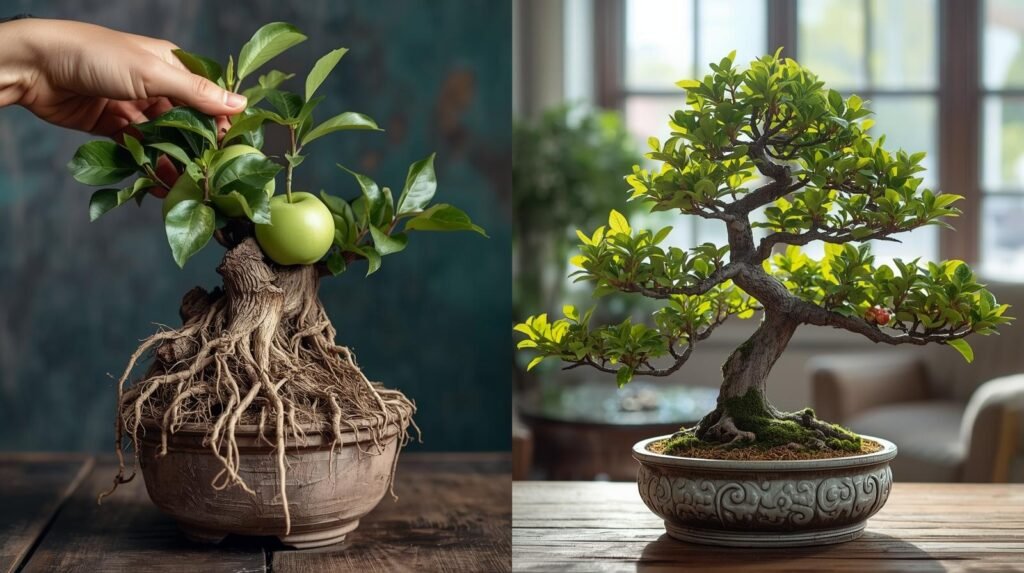
Center the tree in prepared soil. Ensure proper stability using wires if necessary. Adjust orientation for aesthetic view. Fill gaps with soil gradually. Water lightly to settle soil. Avoid compacting excessively. Position affects future growth direction. Careful placement prevents root stress. New pot provides fresh environment.
Watering After Pot Change
Water thoroughly but gently. Ensure water reaches all roots. Avoid overwatering that may suffocate roots. Maintain consistent moisture in following weeks. Mist leaves to reduce transplant stress. Watering supports adaptation to new soil. Healthy hydration improves growth. Watering technique prevents shock and encourages recovery.
Fertilization Post-Pot Change
Avoid fertilizing immediately after transplant. Wait two to three weeks for root recovery. Apply diluted organic fertilizer gradually. Monitor tree response to nutrients. Balanced feeding enhances leaf, flower, and fruit development. Fertilization supports root adaptation. Avoid overfeeding stressed plants. Proper timing ensures healthy bonsai growth.
Light and Temperature Requirements
Provide bright indirect light initially. Gradually expose to direct sunlight. Maintain stable temperatures to reduce shock. Avoid cold drafts or extreme heat. Monitor indoor conditions closely. Adjust light duration for optimal photosynthesis. Proper environment ensures recovery. Balance supports healthy development and flowering.
Regular Pruning for Bonsai Shape
Trim leaves and branches to maintain miniature form. Encourage strong central leader and balanced canopy. Remove crossing branches and dead leaves. Pruning promotes aesthetic shape and airflow. Monitor growth direction. Prune after flowering if necessary. Regular shaping ensures visual appeal. Consistent pruning preserves bonsai structure.
Monitoring Health and Pests
Check for aphids, mites, or fungal infections. Apply organic treatment when needed. Remove dead leaves promptly. Maintain cleanliness around bonsai soil surface. Healthy trees adapt better to pot changes. Early intervention prevents stress. Observation ensures vitality. Healthy bonsai produces more flowers and fruits.
Flowering and Fruiting Care
Encourage blossoms with balanced fertilization. Ensure consistent watering and sunlight. Bees or hand pollination may improve fruit set. Avoid chemical sprays during flowering. Support branches for fruit weight. Observation ensures timely care. Flowering enhances visual beauty. Fruiting demonstrates successful bonsai care.
Seasonal Care for Apple Bonsai
Adjust care based on growth cycle. Dormant winter requires reduced watering. Spring and summer support active growth. Protect from extreme weather. Seasonal adjustments prevent stress. Maintain pruning and fertilization schedule. Seasonal monitoring enhances survival. Timing is critical for long-term bonsai health.
Re-potting Frequency and Signs
Repot apple bonsai every two to three years. Observe root crowding or soil degradation. Signs include slowed growth or water runoff. Repot during dormancy for minimal stress. Evaluate root health during each re-pot. Correct timing ensures continued vitality. Monitor growth to prevent shock. Regular repotting preserves miniature form.
Aesthetic Arrangement and Styling
Shape canopy, branches, and leaves artistically. Consider balance, proportion, and focal points. Arrange in visually pleasing angles. Use training wires if necessary. Incorporate stones or moss in pot for natural appeal. Styling enhances display value. Regular care maintains design. Expert arrangement increases aesthetic impact.
Troubleshooting Common Issues
Yellow leaves indicate nutrient imbalance. Wilting shows water stress. Pest infestations require organic solutions. Fungal infections demand soil aeration and proper watering. Observing tree condition early prevents major problems. Adjust care routines accordingly. Knowledge ensures bonsai success. Proactive management supports longevity.
Table: Apple Bonsai Pot Changing Checklist
Step
Select healthy apple bonsai tree
Step
Choose suitable pot with drainage
Step
Prepare well-draining soil mix
Step
Remove tree carefully and inspect roots
Step
Prune roots and place in new pot
Step
Water thoroughly and monitor recovery
Step
Adjust light, temperature, and fertilization
Step
Maintain regular pruning and care