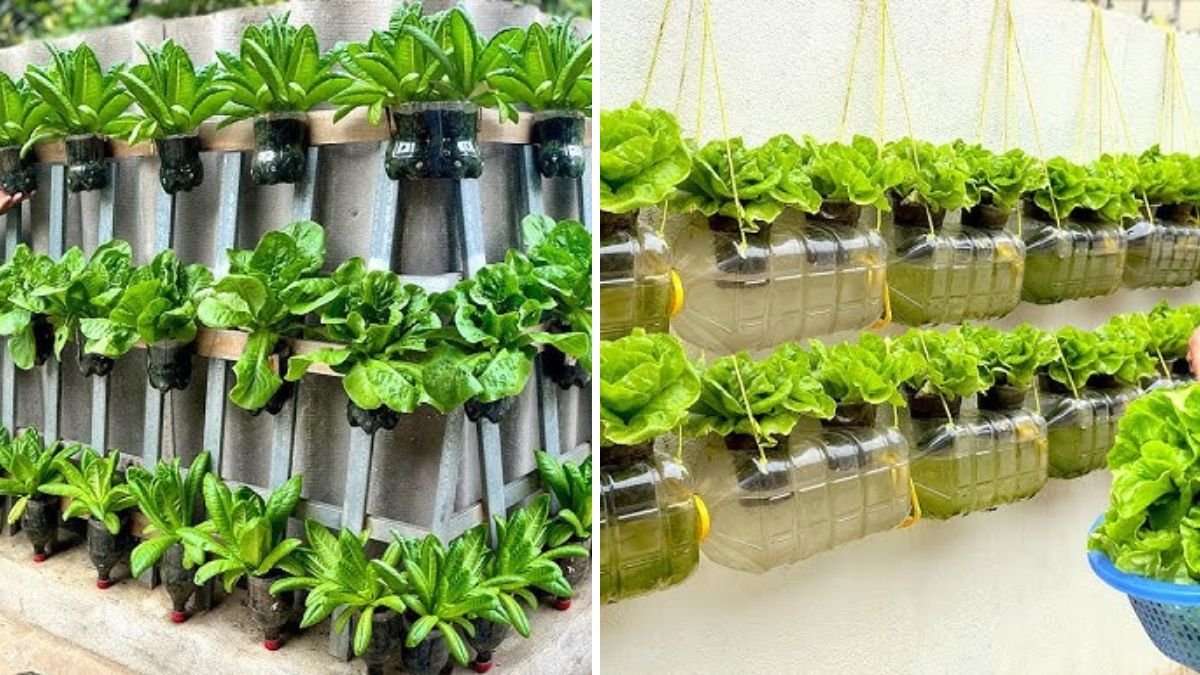
Urban gardening has transformed the way people grow food, especially in small homes, tiny balconies, and crowded cities. But one method is so simple, so low-cost, and so effective that it surprises even experienced gardeners — growing vegetable gardens on walls using recycled plastic bottles.
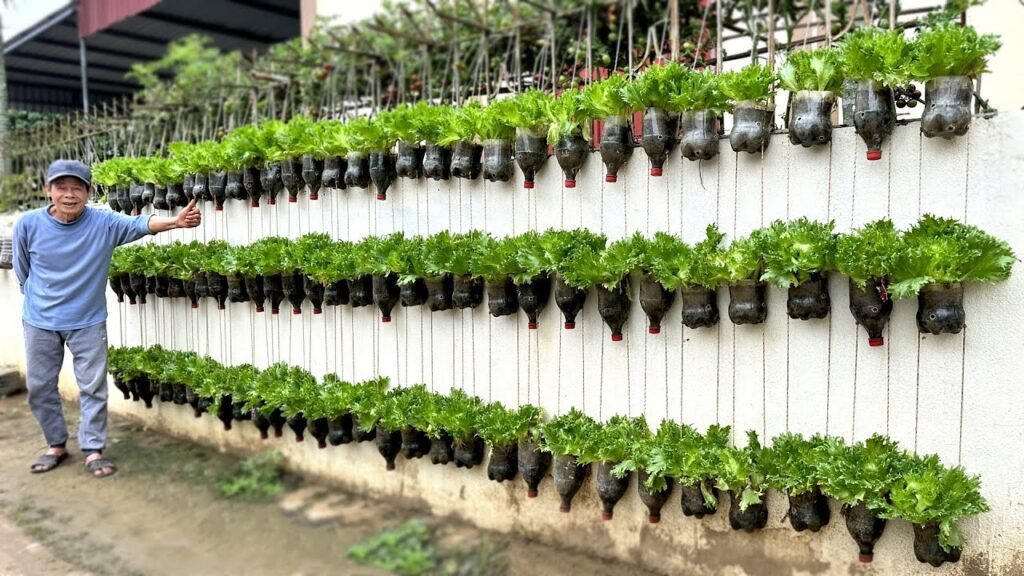
With just a few used bottles, some string or wire, and a little creativity, you can turn a plain wall or balcony railing into a lush, productive, and beautiful vertical vegetable garden. It requires almost no space, very little investment, and minimal maintenance — yet the harvest can be surprisingly big.
In this article, you’ll learn why wall gardens are becoming so popular worldwide, how to build one step-by-step, the best vegetables to grow, and the secret techniques to achieve healthy, year-round production.
Let’s dive into the easiest form of sustainable gardening anyone can start today!
🌎 Why Wall Vegetable Gardens Are So Popular
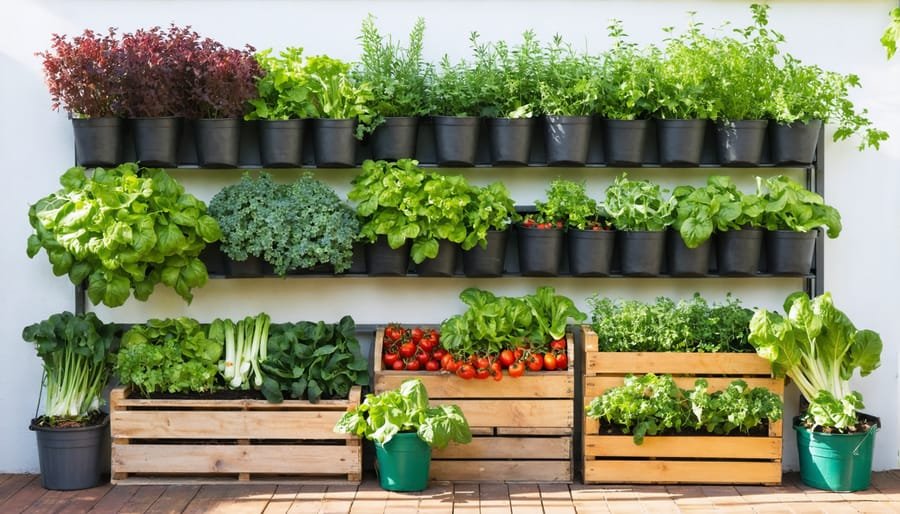
Growing vegetables on walls is not just a trend — it’s a smart and practical solution for modern living.
✔ Perfect for small homes
Even people with no garden or backyard can grow vegetables easily.
✔ Zero wasted space
Empty walls, fences, balcony railings, and even staircases become green, productive areas.
✔ Uses recycled plastic bottles
An eco-friendly approach that reduces waste and keeps bottles out of landfills.
✔ Low maintenance
Vertical systems improve air flow, reduce pests, and require less watering.
✔ Beautiful & decorative
A wall of green vegetables, herbs, and flowers adds life and freshness to your home.
✔ Grow food all year
In warm climates or indoors, wall gardens produce continuously.
This method works beautifully in the US, Europe, Asia, and anywhere else — all you need is a wall with good light.
🧰 Materials You Need
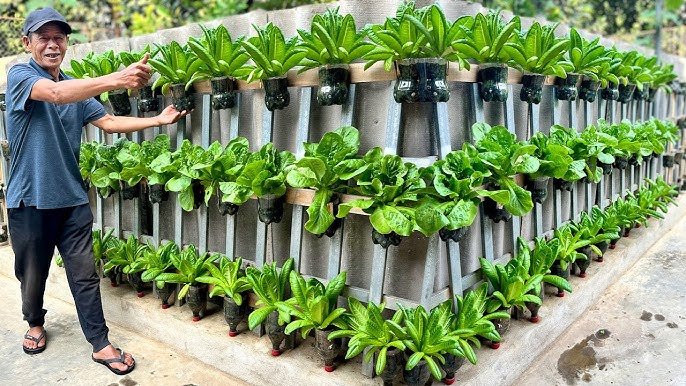
One of the biggest advantages of this system is how affordable it is. Most materials are already available at home.
✔ Clean plastic bottles (1L, 1.5L, or 2L)
✔ Cutter or scissors
✔ Potting soil or cocopeat
✔ Small pebbles or gravel
✔ Rope, wire, or sturdy string
✔ Drill or hot nail for making holes
✔ Seeds or seedlings
✔ Hooks or nails (for mounting bottles)
That’s it! With these, you can build a vertical vegetable garden in 20–30 minutes.
🪜 How to Build Your Recycled Bottle Wall Garden
This simple step-by-step method turns waste bottles into productive planters.
1. Prepare the Bottles
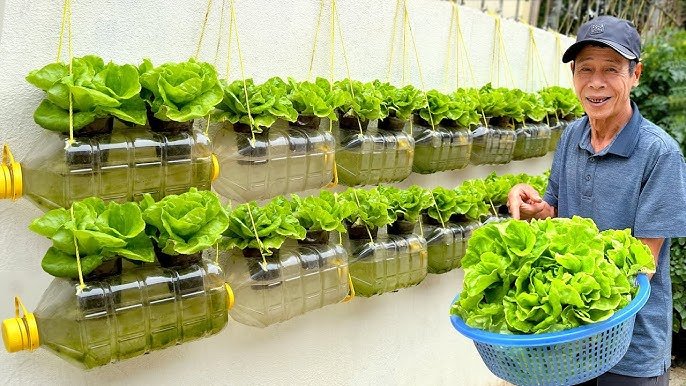
Depending on the vegetables you want to grow, you can use bottles in two ways:
Horizontal Bottles
Perfect for:
- Lettuce
- Spinach
- Herbs
- Strawberries
Cut a large rectangular opening on one side of the bottle to create a planting window.
Vertical Bottles
Great for:
- Chili plants
- Tomatoes (dwarf)
- Cucumbers (mini)
- Peas
- Beans
Cut off the bottom and hang the bottle neck downwards for drainage.
2. Add Drainage Holes
Using a hot nail or drill:
- Make 3–5 small holes at the bottom
- Make 1–2 holes on the sides for air flow
Good drainage prevents root rot and keeps plants healthy.
3. Add a Base Layer
Before adding soil, place:
- Pebbles
- Gravel
- Small stones
This prevents compacting and improves drainage.
4. Fill with High-Quality Soil
Use light, loose, nutritious soil. Best mixes include:
- 50% cocopeat
- 30% compost
- 20% perlite or sand
Avoid heavy garden soil — it compresses in bottles and blocks roots.
5. Plant Your Seeds or Seedlings
Make small holes and gently place your plants.
For fast-growing vegetables like lettuce, radish, Chinese cabbage, or mustard greens, sow seeds directly.
For tomatoes, peppers, and cucumbers, use small seedlings.
6. Arrange and Hang Your Bottles
Now, attach the bottles to your wall:
- Use strong rope
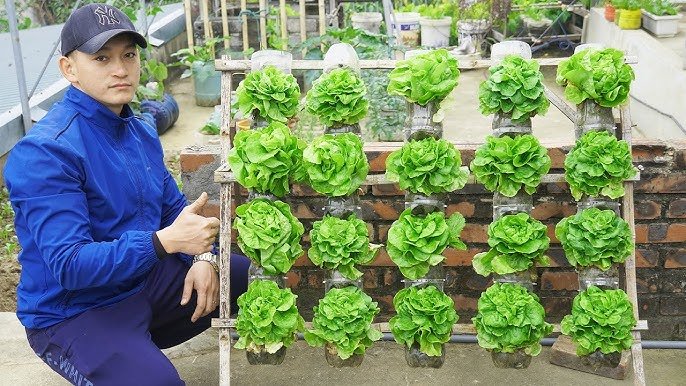
- Tie bottles horizontally or vertically
- Ensure equal spacing for sunlight
- For balconies, hang them on railings
Create patterns like:
- Straight rows
- Staircase-style
- Zig-zag design
- Grid arrangement
This also adds beauty to your home.
7. Water Properly
Watering is easy:
- Top bottles drip into the lower bottles
- This saves water and nutrients
- Reduces your work by 50%
Be careful not to overwater — bottles drain fast.
🌞 Light Requirements — The Secret to Success
Vegetables need 4–6 hours of direct sunlight daily.
Best locations:
- South-facing walls (US & Europe)
- East-facing balconies
- Window walls
- Terrace walls
If growing indoors:
- Use LED grow lights for 6–8 hours daily
Good light = fast growth + sweeter leaves + more productivity.
🥬 Best Vegetables for Bottle Wall Gardens
Not all vegetables thrive in small containers, but many do amazingly well.
🌿 Leafy Greens
- Spinach
- Lettuce
- Kale
- Mustard greens
- Bok choy
- Arugula
Grow fast and love vertical setups.
🌱 Herbs
- Basil
- Mint
- Cilantro
- Parsley
- Chives
Perfect for small bottles.
🍓 Fruiting Plants (Choose small varieties)
- Cherry tomatoes
- Dwarf peppers
- Mini cucumbers
- Bush beans
- Peas
Need slightly bigger bottles, but grow well with support.
🍓 Strawberries
One of the best vertical garden plants — they cascade beautifully.
🌧 Watering & Fertilizing Tips
Plastic bottles dry out faster, so consistency is important.
✔ Water small plants daily (lightly)
✔ Water larger plants every 2–3 days
✔ Use a spray bottle for seedlings
✔ Apply liquid fertilizer every 10–12 days
Best fertilizers:
- Compost tea
- Seaweed extract
- Diluted cow dung tea
- NPK liquid for fruiting plants
- Banana peel water
Avoid overfeeding — bottles hold small amounts of soil.
🐞 Pest Control for Wall Gardens
Vertical gardens naturally reduce pests because plants are lifted off the ground.
Still, check for:
- Aphids
- Whiteflies
- Caterpillars
Use organic remedies:
- Neem oil spray
- Soap water
- Garlic-chili spray
Better airflow on walls helps prevent fungal diseases too.
🧼 Maintenance Tips for Long-Term Success
Wall gardens are low maintenance, but a few habits keep them thriving:
✔ Trim yellow leaves
✔ Replace compacted soil every 2–3 months
✔ Rotate plant positions for even light
✔ Add compost twice a month
✔ Keep the wall clean to prevent algae
A maintained wall garden stays productive for years.
🍅 How to Expand Your Wall Garden Over Time
Start small — maybe with 5–6 bottles.
Then grow your vertical farm by:
- Adding more rows
- Experimenting with different vegetables
- Using larger bottles for fruiting plants
- Designing beautiful patterns
- Adding drip irrigation
Many gardeners eventually turn entire walls into food-producing systems.
🌟 Benefits You Will Notice Quickly
Once your wall garden starts growing, you’ll enjoy:
⭐ Fresh vegetables daily
⭐ Cleaner air around your home
⭐ Cooler walls due to plant shade
⭐ Reduced plastic waste
⭐ Beautiful natural decoration
⭐ Lower grocery bills
⭐ A calming, green environment
Your home will look alive, refreshing, and full of energy.
🌱 Conclusion: A Simple Idea That Grows Into Something Beautiful
Growing vegetable gardens on walls using recycled plastic bottles is one of the easiest, smartest, and most eco-friendly gardening methods in the world. It requires almost no space, costs nearly nothing, and produces fresh vegetables consistently.
Whether you live in a busy city apartment, a small home with no yard, or a large house with plenty of walls to decorate — this vertical gardening method fits anywhere.
Turn your walls into green, productive, vibrant spaces and enjoy fresh food every day. With a few bottles and a little creativity, you can grow a beautiful vegetable garden that will impress everyone who sees it.