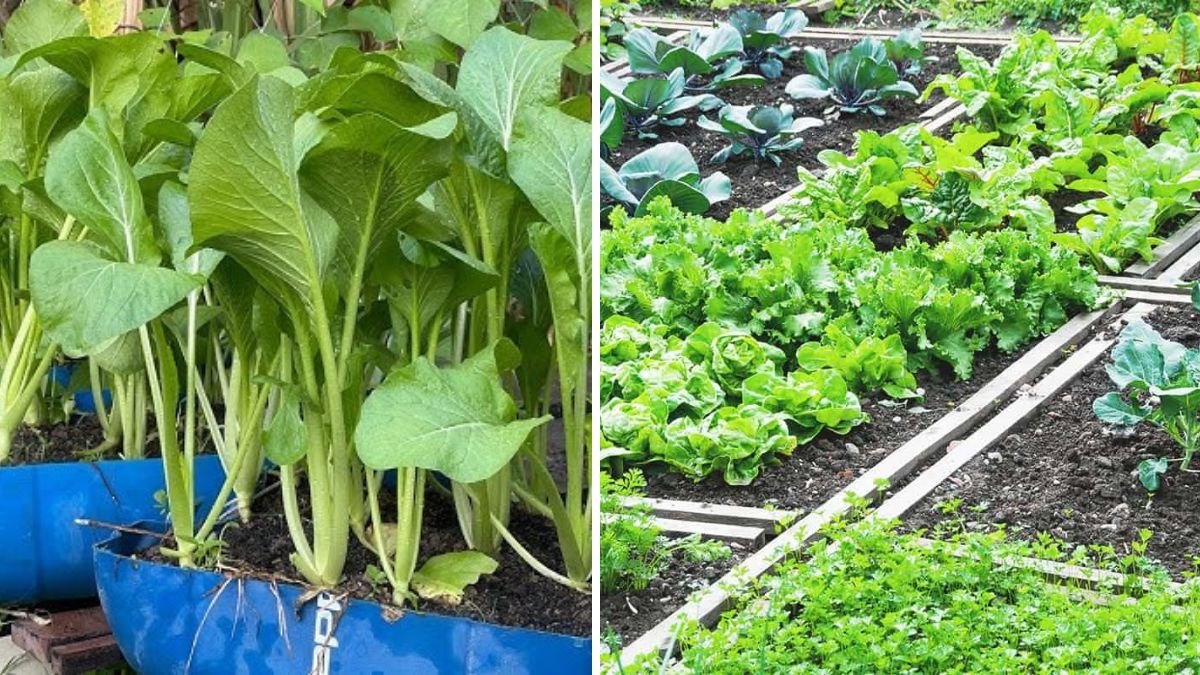
Growing your own fresh leafy greens has never been easier. Whether you live in an apartment, a small house, or a big farm, you can enjoy bowls of clean, crisp, nutrient-rich vegetables without needing a garden, fancy tools, or complex techniques. With this simple growing method, your vegetables will grow faster, healthier, and with almost no effort. Many gardeners are shocked at how well their greens thrive using this low-maintenance, soil-efficient technique—and once you try it, you’ll wonder why you didn’t start sooner.
This guide reveals the easiest way to grow strong, beautiful leafy greens at home. The method works for spinach, lettuce, bok choy, mustard greens, amaranth, kale, coriander, and more!
🌿 Why This Method Works So Well
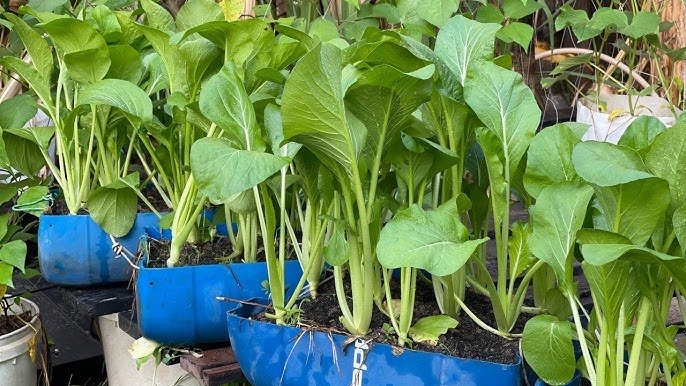
Most people struggle with growing leafy vegetables because of common issues such as:
- Soil drying out too quickly
- Poor drainage
- Overcrowding
- Nutrient imbalances
- Pests attacking young plants
The “easy fast-growing” technique avoids all these problems by focusing on three core principles:
1. Light, breathable soil
Vegetables grow quickly when roots can breathe and spread easily.
2. Steady moisture—not too much, not too little
Consistent hydration makes greens grow fast and tender.
3. Nutrient-rich organic feeding
Slow-release nutrition keeps the plants healthy without burning them.
This method balances all three perfectly—even beginners can follow it effortlessly.
⭐ Step-by-Step Guide to Growing Fast, Healthy Vegetables at Home
1. Choose Your Container (Anything Works!)
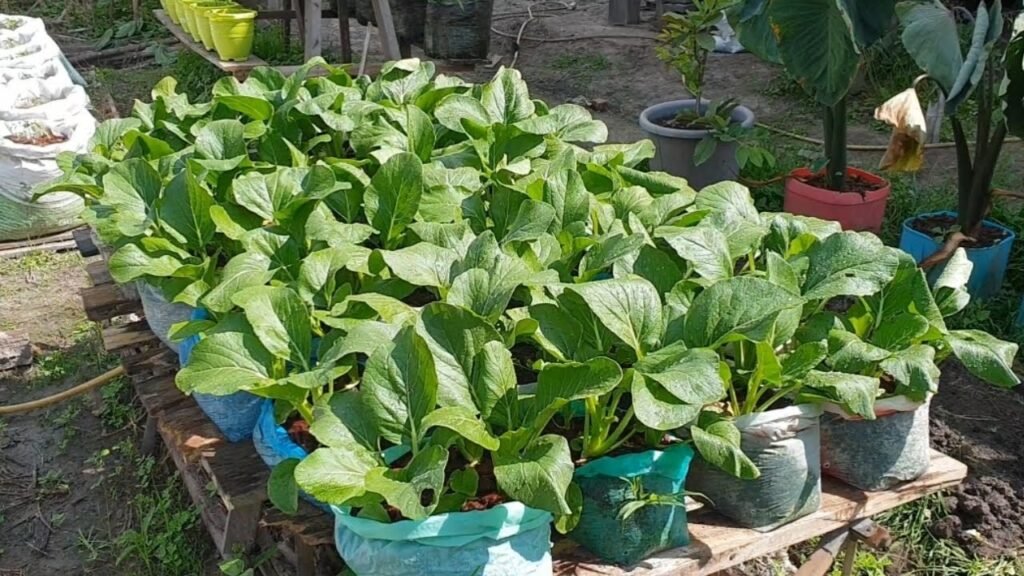
One of the best things about this technique is its flexibility. You can use almost any container, such as:
- Plastic tubs
- Buckets
- Recycled crates
- Grow bags
- Styrofoam boxes
- Deep trays
- Old pots
Minimum depth required: 6–8 inches
Leafy greens don’t need deep soil, but they love space for root expansion.
Add drainage holes if your container doesn’t have any. Proper drainage prevents root rot and keeps the soil airy.
2. Prepare the Perfect Light Soil Mix
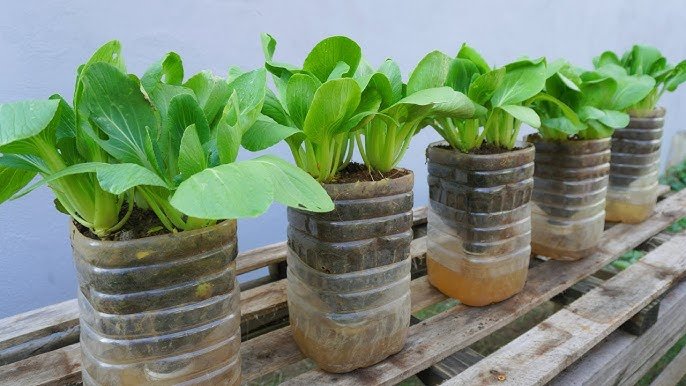
Your vegetables will grow faster if the soil is soft, loose, and rich. Here is the ideal mixture:
🌱 Fast-Growth Soil Mix Recipe
- 40% garden soil or topsoil
- 30% compost or vermicompost
- 20% coco peat or dry leaves compost
- 10% sand or perlite (improves drainage)
Why it works:
- Coco peat retains moisture but stays light
- Compost provides natural nutrients
- Sand/perlite prevents compaction
- Soil gives structure and minerals
Before planting, mix everything thoroughly so nutrients are evenly distributed.
3. Sow the Seeds the Right Way
Different leafy vegetables require slightly different spacing, but here’s a universal rule:
✨ Sprinkle, Don’t Bury
- Lightly sprinkle seeds over the top
- Cover with a thin layer of soil (just enough to hide them)
- Mist with water to avoid displacing the seeds
If planting larger seeds like spinach or fenugreek, sow them slightly deeper: around 0.5 cm.
Tip:
If you want continuous harvests, sow seeds every 10–12 days in small batches.
4. Keep Moisture Consistent
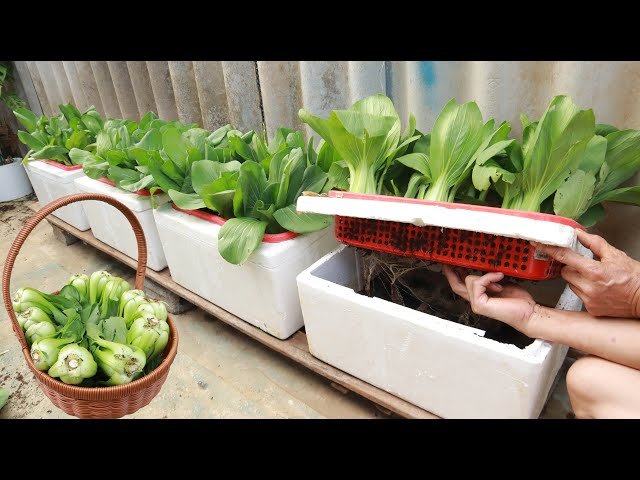
Moisture plays the biggest role in how quickly leafy vegetables grow. They love soil that is always damp but not soggy.
💧 Watering Guide:
- Water lightly twice a day for the first 3–4 days
- Reduce to once a day after seedlings appear
- In hot weather, check moisture more frequently
Using a spray bottle or fine sprinkler is ideal—this protects delicate seedlings from bending or breaking.
5. Make Your Leaves Grow Faster With Organic Fertilizers
After 10–12 days, seedlings are ready for feeding.
🌿 Best Organic Fertilizers for Fast Growth
- Diluted compost tea (weekly)
- Seaweed extract (every 10–15 days)
- Cow dung liquid fertilizer (mild, once in 2 weeks)
Avoid strong chemical fertilizers; they make leaves grow bitter and reduce nutrition.
6. Give Your Greens Enough Sunlight

Leafy vegetables grow best with:
☀️ 4–5 hours of mild morning sunlight
and shade during the harsh afternoon sun.
If you grow indoors, place the container near:
- a balcony,
- a sunny window, or
- use a small grow light.
Greens are very adaptable—you’ll be amazed how quickly they flourish.
🍀 Harvesting: Get Ready for Quick, Big Results!
Most leafy vegetables grow rapidly using this method. You can expect:
Harvest time:
- Baby leaves: 12–18 days
- Full-grown leaves: 25–35 days
The best way to harvest is the “cut-and-grow-again” method:
- Cut outer leaves
- Leave the center intact
- New leaves will regrow repeatedly
You can harvest up to 4–6 cycles from a single sowing!
💡 Tips to Make Your Greens Even Bigger and Healthier
✔ Mist instead of heavy watering
This prevents soil compaction.
✔ Avoid overcrowding
If plants grow too close, thin the seedlings.
✔ Keep leaves dry
Water the soil, not the leaves—this prevents fungus.
✔ Rotate containers
Move them occasionally to ensure uniform sunlight.
✔ Remove weak seedlings
This allows the stronger ones to grow bigger and faster.
🌱 Why This Method Is Perfect for Busy People
This growing technique is ideal for anyone who wants:
- fresh homegrown vegetables,
- minimal daily maintenance,
- clean, pesticide-free produce,
- fast results,
- or a space-saving garden.
Even if you only have a balcony, terrace, or window space, you can grow fresh greens all year long.
🌿 Final Thoughts: Fast, Fresh, and Effortless
Growing green vegetables at home does not need to be complicated. With a simple soil mix, steady moisture, a little sunlight, and organic feeding, you can grow fresh, lush vegetables faster than you ever imagined.
This method is beginner-friendly, budget-friendly, and incredibly rewarding. Once you taste your own fresh greens—crispy, sweet, and chemical-free—you’ll never want store-bought leaves again.
Your home can become a small, productive vegetable farm with almost no work. Try it once, and you’ll be hooked!