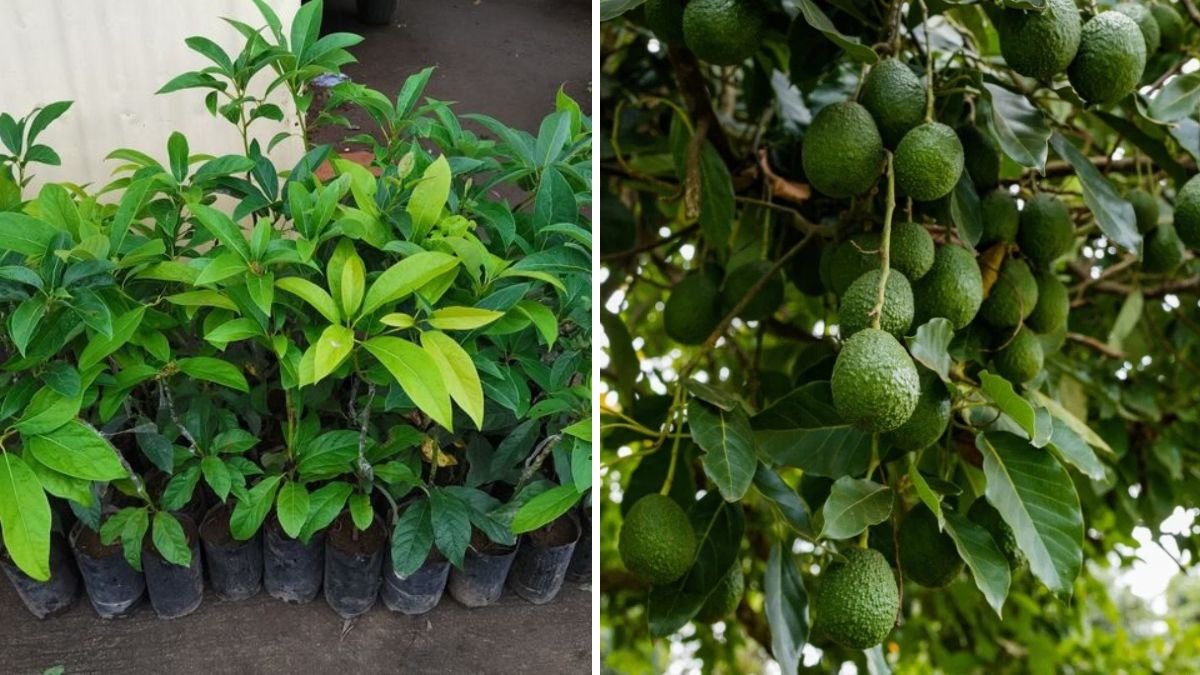
Avocado trees are loved all over the world for their creamy fruits, rich flavor, and incredible nutritional value. But growing an avocado tree from seed can take 5–10 years before it bears fruit—sometimes even longer. That’s a long time to wait, especially for gardeners who want results sooner.
Thankfully, there’s a powerful technique that transforms slow-growing seedlings into fast-producing, high-yielding avocado trees. That technique is grafting.
Grafting doesn’t just speed up growth—it improves fruit quality, increases disease resistance, and gives you predictable results every time. If you dream of harvesting homegrown avocados in the shortest time possible, this guide will teach you everything you need to know.
🌳 Why Grafting Is Essential for Avocado Trees

Growing avocados from seed is fun, but it comes with two major problems:
❌ 1. Long, unpredictable maturity time
Seed-grown avocados may take many years to fruit—or might never produce at all.
❌ 2. Unknown fruit quality
Seedlings don’t grow “true to type,” meaning the fruit quality may be poor or different from the parent tree.
On the other hand…
✔️ Grafted avocado trees start fruiting in just 2–3 years
✔️ They produce predictable, high-quality avocados
✔️ They grow stronger and adapt better to local soil
This is why commercial orchards rely almost entirely on grafting. And you can apply the same professional techniques in your home garden.
🌿 Understanding the Basics of Grafting
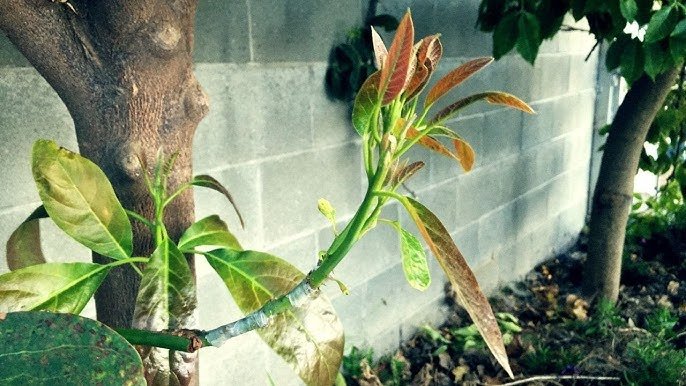
Grafting simply means joining two plants together so they grow as one.
Rootstock (Base Plant):
A young, healthy avocado seedling grown from seed.
It provides the roots and determines the plant’s strength and adaptability.
Scion (Top Cutting):
A branch from a mature, fruit-producing avocado tree with desirable qualities such as taste, size, or yield.
When joined correctly, the scion begins growing on the rootstock and quickly becomes a mature, fruit-bearing tree.
🌱 Step 1: Preparing the Rootstock

The success of grafting depends heavily on the rootstock.
Choose a rootstock that is:
- 6–12 months old
- Pencil-thick in diameter
- Healthy and disease-free
- With straight, vigorous growth
Why young rootstock is ideal:
Younger plants heal faster, allowing the graft union to fuse quickly and strongly.
If you don’t have a rootstock already, simply plant an avocado seed, keep it watered, and wait until the stem reaches the right thickness.
✂️ Step 2: Selecting the Perfect Scion
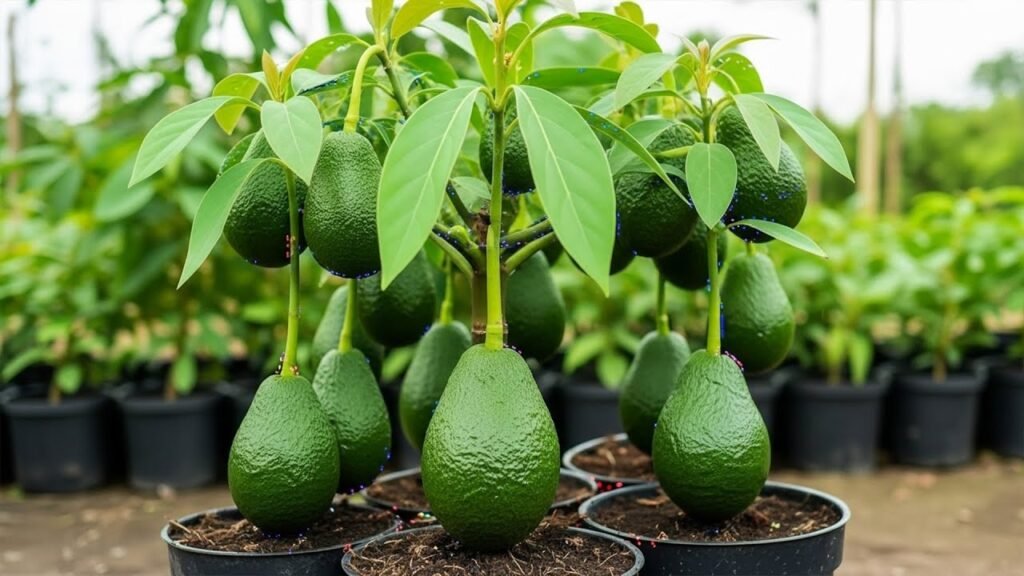
Choosing the right scion determines the quality of your future fruit.
Good scion characteristics include:
- Taken from a mature, fruit-bearing tree
- Semi-hardwood (not too young, not too old)
- About 10–12 cm long
- With 2–3 buds
- Disease-free and fresh
Cut the scion early in the morning when the plant’s moisture level is high. Wrap it in a moist cloth to keep it fresh until grafting.
🔪 Step 3: Best Grafting Methods for Avocado
There are several grafting techniques, but three work exceptionally well for avocado trees:
1. Cleft Grafting (Best for beginners)
This method is simple and has a high success rate.
How to do it:
- Cut the rootstock horizontally about 10–12 cm above soil level.
- Make a 3–4 cm deep vertical slit on the cut surface.
- Shape the scion into a wedge at the bottom.
- Insert the scion wedge into the rootstock slit.
- Ensure the cambium layers (green edges) align.
- Wrap tightly with grafting tape.
2. Whip and Tongue Grafting (Very strong union)
Ideal when the scion and rootstock are the same thickness.
Steps:
- Cut both scion and rootstock at a matching angle.
- Make a small tongue cut on both surfaces.
- Fit them together like puzzle pieces.
- Wrap securely.
This method heals quickly and produces vigorous growth.
3. Side Veneer Grafting (Good for potted plants)
Perfect if you don’t want to cut the rootstock entirely.
How to do it:
- Make a downward cut on the side of the rootstock.
- Shape the scion to fit this cut.
- Insert and secure firmly.
The rootstock continues growing until the graft takes.
🎀 Step 4: Securing and Sealing the Graft
Once the scion is inserted, it must be protected.
Important steps:
- Wrap the graft union tightly with grafting tape or polythene
- Cover the scion with a transparent bag to retain humidity
- Keep the bag shaded to prevent overheating
Good sealing prevents bacteria, dehydration, and pests from entering the graft union.
🌤 Step 5: Post-Graft Care (The Healing Stage)
The graft must be nurtured gently until it bonds completely.
Place the plant in:
- Bright, indirect light
- A warm area (20–28°C)
- A location protected from wind
Check regularly:
- Remove any new shoots from the rootstock below the graft
- Avoid disturbing the graft union
- Lightly water the soil—don’t overwater
In 2–4 weeks, the scion begins to swell, and new leaves will emerge—a sign of success.
🌿 Step 6: Removing the Bag and Supporting New Growth
Once the new buds start growing vigorously:
✔ Open the plastic bag gradually over 3–4 days
✔ Allow the graft to harden in natural air
✔ Tie a support stick if the scion is tall
✔ Slowly expose the plant to full sunlight
This transition phase is critical to prevent shock.
🍃 Common Mistakes to Avoid
Grafting avocado trees sounds easy, but beginners often make these mistakes:
❌ Misaligning the cambium layers
❌ Using dry or unhealthy scion wood
❌ Grafting during very hot or cold weather
❌ Watering too much after grafting
❌ Removing the tape too early
❌ Allowing shoots to grow below the graft
Avoid these mistakes for higher success rates.
🍐 When Will a Grafted Avocado Tree Fruit?
One of the greatest benefits of grafting is rapid fruiting.
A grafted avocado tree can produce fruit within:
👉 2–3 years (ideal conditions)
👉 3–4 years (container-grown plants)
This is much faster than seed-grown trees—which take 5–10 years or more.
🌟 Benefits of Grafted Avocado Trees
✔ Faster fruiting
✔ Better fruit quality
✔ Disease-resistant rootstock
✔ Drought tolerance
✔ Consistent yield
✔ Adaptation to local soil
✔ Stronger, healthier growth
These advantages make grafting the most reliable way to grow avocados at home or commercially.
🌱 Choosing the Best Avocado Varieties for Grafting
Here are popular scion choices depending on your region:
Hass – Most popular worldwide
Fuerte – Rich flavor, cold hardy
Reed – Large fruits, creamy
Bacon – Good for cooler climates
Wurtz (Dwarf Variety) – Perfect for pots and small spaces
Your grafted tree will inherit the fruit quality of whichever scion you select.
🛠 Final Tips for Guaranteed Success
✔ Graft during spring or early summer when sap flow is strong
✔ Use sterilized tools
✔ Always align the green cambium layer
✔ Keep the graft tightly sealed
✔ Protect from direct sunlight for 10–15 days
✔ Support new growth with a stick
✔ Feed the plant lightly after 30 days
With these steps, your success rate can reach 80–95%.
🌳 Conclusion: Unlock Fast, Healthy Avocado Growth Through Grafting
Grafting is more than just a gardening technique—it is a smart investment in faster growth, better fruit quality, and a reliable harvest. By combining the strength of a rootstock with the proven fruiting capability of a mature scion, you create an avocado tree that grows rapidly, adapts well, and produces delicious fruits in just a few years.
Whether you are a hobby gardener or someone dreaming of an avocado orchard, mastering grafting is the key to unlocking rapid growth and success.
Start today—and in a few seasons, you’ll enjoy the reward of your own homegrown avocados.